What Changes Nutritionally When a Dog Becomes a Senior
Before getting into individual products, it helps to understand exactly what shifts in an aging dog's body, because that's what separates a genuinely useful senior formula from a bag that just slaps "senior" on the label without changing much underneath.
1. Slower Metabolism, Lower Calorie Needs
Senior dogs are typically less active than they were as younger adults, and their metabolic rate drops correspondingly, often by around 20%. Feeding the same calorie load as their adult years is one of the most common ways owners accidentally let a senior dog become overweight, which then puts additional strain on joints that are already more vulnerable. A good senior formula reduces calorie density without shrinking portion sizes so much that the dog feels perpetually hungry.
2. More Protein, Not Less
This is the biggest myth in senior dog nutrition. For decades, conventional wisdom pushed lower-protein diets for older dogs to "protect the kidneys." Current veterinary nutrition research has largely reversed that advice: healthy senior dogs need as much or more high-quality protein than younger adults to counter sarcopenia, the natural loss of lean muscle mass that comes with aging. Protein restriction is only appropriate for dogs with a vet-diagnosed kidney condition requiring a therapeutic prescription diet, not as a blanket rule for every aging dog.
3. Joint Support Becomes Non-Negotiable
Glucosamine and chondroitin help maintain cartilage health, and by the time a dog reaches its senior years, some degree of joint wear is close to universal, even without a diagnosed condition like arthritis. Omega-3 fatty acids (EPA and DHA) add an anti-inflammatory effect that measurably helps mobility in many dogs within a few weeks of a diet change. If a senior formula doesn't list meaningful levels of both, it's not doing the job the "senior" label implies.
4. Digestibility and Palatability
Older dogs often have a less efficient digestive system and, in some cases, a diminished sense of smell that reduces interest in food. Highly digestible protein sources, added fiber for consistent stool quality, and stronger aromatic profiles (real meat as the first ingredient, not meal fillers) all help keep a senior dog eating enough to maintain weight and energy. Dental issues are also common in older dogs, so kibble size and texture, or the option to add warm water or wet food, matter more than they did in their younger years.
5. Cognitive Support
Canine cognitive dysfunction, sometimes described as "doggy dementia," affects a meaningful share of dogs over 10. Antioxidants (vitamin E, beta-carotene), DHA, and medium-chain triglycerides have shown measurable benefit for cognitive function in research on aging dogs. Formulas that specifically market "brain health" or "cognitive support" typically boost these ingredients above what a standard adult formula contains.

Royal Canin's senior formula is built around a precisely tuned balance of protein, joint-support nutrients, and antioxidants specifically for dogs entering their older years, and the label backs it up with a nutrient profile that doesn't cut corners on protein the way older-generation senior foods used to. Verified buyer reviews consistently mention it agreeing well with sensitive senior stomachs and improved coat condition within a month or two of switching.
Pros
- Balanced protein level that supports muscle mass rather than restricting it
- Antioxidant complex (vitamin E, vitamin C) supports aging immune function
- Kibble shape and size designed to be easier for older dogs to chew
Cons
- Priced above several competitors in this lineup
- Contains corn, which some owners prefer to avoid regardless of allergy status
Price range: $45–$70

Hill's built this formula specifically around brain health, layering in a proprietary blend meant to support alertness and engagement in older dogs alongside the joint and coat benefits you'd expect from a vet-trusted brand. It's a formula veterinary nutritionists reach for often, and reviewers frequently describe visible improvements in energy and interest in walks within the first few weeks.
Pros
- Formulated specifically to support brain function, alertness, and engagement
- Real chicken listed as the first ingredient
- Backed by decades of clinical nutrition research
Cons
- Not grain-free, which won't suit dogs with a diagnosed grain allergy
- Some owners report a strong smell compared to other formulas
Price range: $50–$80
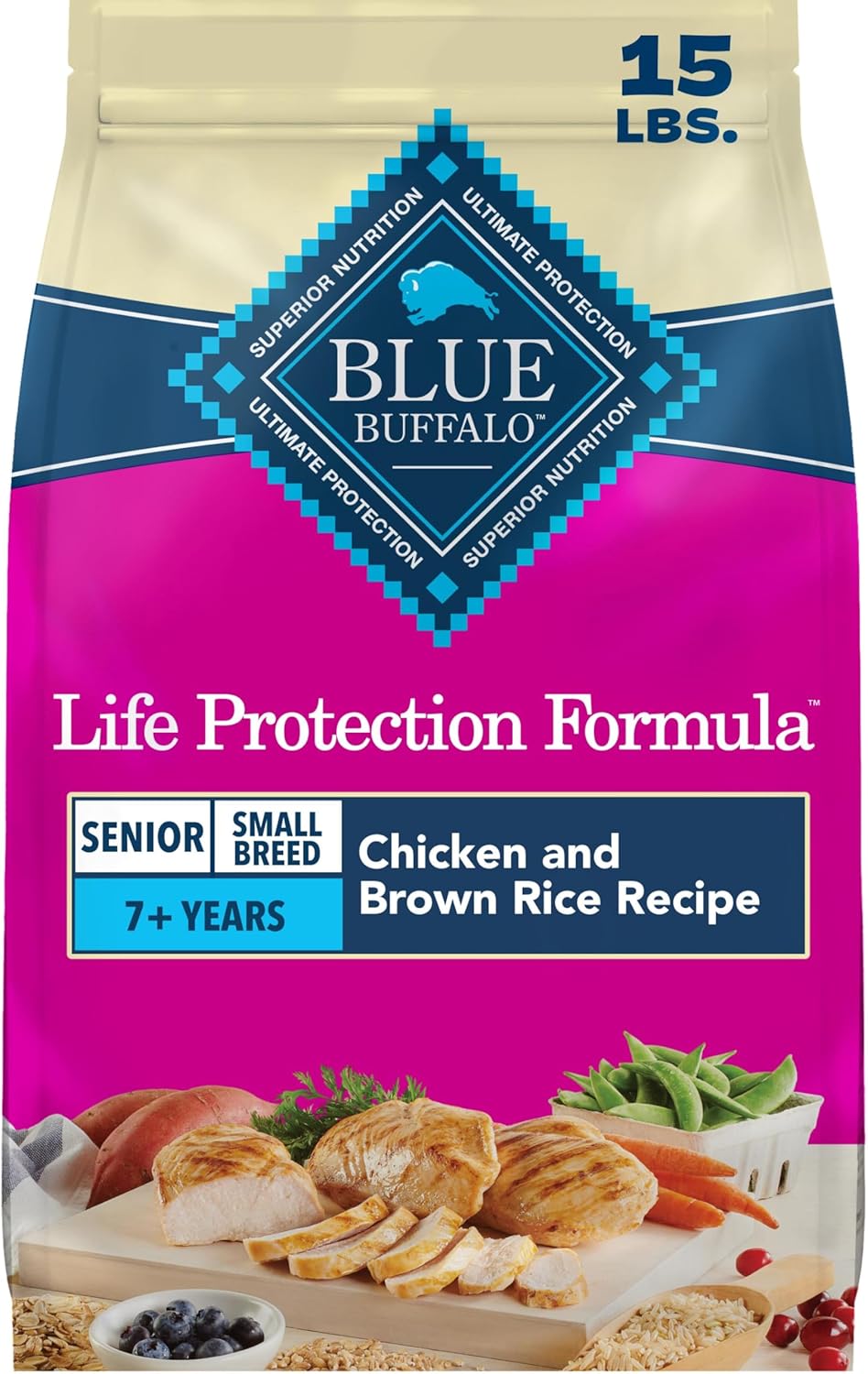
Small senior dogs have different needs than a slowing Labrador, including smaller kibble, denser calories per bite, and often pickier appetites. Blue Buffalo's small breed senior formula addresses all three while keeping real chicken as the first ingredient. The LifeSource Bits (a cold-formed blend of antioxidants, vitamins, and minerals) are a genuine differentiator that shows up in reviewers' comments about coat shine and energy.
Pros
- Small kibble size sized appropriately for smaller senior mouths and teeth
- Glucosamine and chondroitin included for joint and hip support
- No poultry by-product meal, corn, wheat, or soy
Cons
- Past manufacturing recalls have made some owners cautious, though current formulas are considered safe
- Smaller bag sizes mean a higher cost per pound than large-bag competitors
Price range: $35–$55
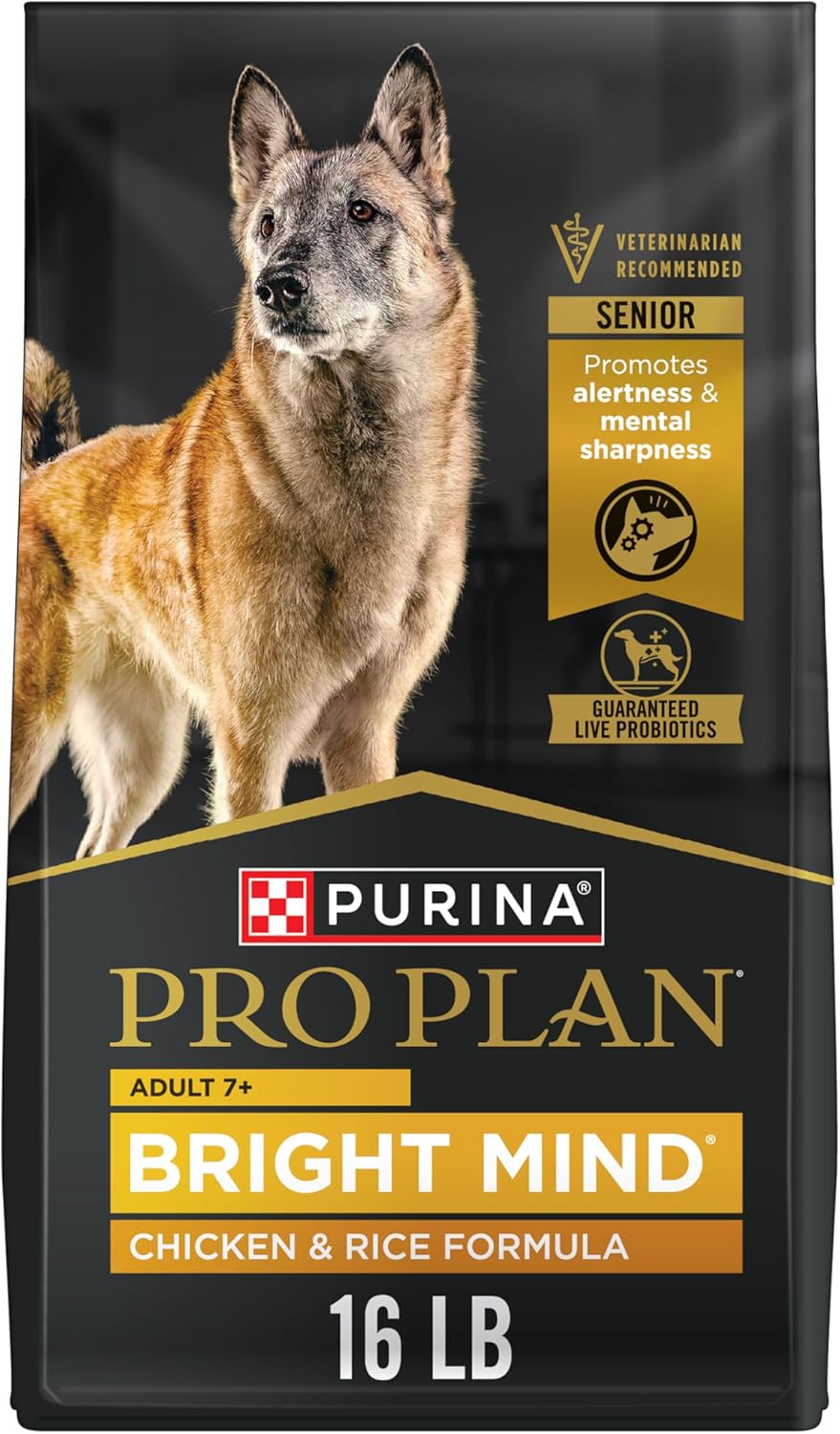
Purina Pro Plan's Bright Mind line was developed with input from veterinary neurologists specifically to support cognitive health in aging dogs, and it does so at a noticeably lower price point than the premium names in this lineup. Live probiotics support digestive consistency, which matters more as a dog's gut microbiome shifts with age, and it's one of the more widely available options if you'd rather not rely on shipping for refills.
Pros
- Bright Mind formula developed with veterinary neurologist input for cognitive support
- Live probiotics support digestive and immune health
- Strong value relative to the other formulas in this lineup
Cons
- Contains poultry by-product meal, which some owners prefer to avoid
- Joint-support ingredient levels are present but lower than the joint-focused picks above
Price range: $30–$50

Wellness leans into a "natural" positioning without going grain-free, which fits current veterinary guidance for senior dogs who don't have a diagnosed grain allergy. Chicken is the first ingredient, glucosamine and chondroitin are included for joint health, and reviewers frequently mention it working well for senior dogs with mild digestive sensitivity thanks to the wholesome-grain base rather than a heavier legume-based recipe.
Pros
- Grain-inclusive recipe avoids the DCM concern associated with legume-heavy grain-free diets
- No poultry by-products, wheat, corn, soy, or artificial preservatives
- Glucosamine and chondroitin included for joint support
Cons
- No dedicated cognitive-support ingredient blend, unlike the Hill's and Purina picks above
- Some reviewers note the kibble is less aromatic than competitors, which can matter for dogs with reduced appetite
Price range: $45–$75
Quick Comparison
| Product | Best For | Price | Rating |
|---|---|---|---|
| Royal Canin Senior | Overall balance | $45–$70 | |
| Hill's Science Diet Adult 7+ Senior Vitality | Cognitive/brain support | $50–$80 | |
| Blue Buffalo Small Breed Senior | Small senior dogs | $35–$55 | |
| Purina Pro Plan Bright Mind 7+ | Budget-conscious buyers | $30–$50 | |
| Wellness Age Advantage Senior | Natural, grain-inclusive | $45–$75 |
When to Choose Which
Every senior dog ages differently, so the "best" pick really depends on what's actually going on with your dog. Here's a quick cheat sheet based on common situations.
Stick with Royal Canin if you want a well-rounded formula that checks every senior-specific box, including protein, joints, and antioxidants, without needing to chase down a more niche formula for a specific concern.
Choose Hill's Science Diet Adult 7+ if you've noticed your dog seeming less engaged, sleeping more, or showing early signs of cognitive slowdown, and you want a formula with research-backed brain-health ingredients.
Go with Blue Buffalo Small Breed Senior if your dog is under 20 pounds; small kibble sized for small mouths matters more than it seems once dental sensitivity sets in.
Pick Purina Pro Plan Bright Mind if you want genuine cognitive-support formulation without paying premium prices, and your dog does fine with a by-product-inclusive recipe.
Switch to Wellness Age Advantage if your priority is a "natural," grain-inclusive ingredient list without legume-heavy grain-free fillers, and cognitive support isn't your top concern.
Our Top Pick
Royal Canin Senior takes the top spot because it doesn't over-index on one benefit at the expense of another; the protein level respects current research on preserving senior muscle mass, the joint-support ingredients are present at meaningful levels, and the kibble itself is shaped to be easier on aging teeth. It's the safest default recommendation for a healthy senior dog without a specific diagnosed condition.
If cognitive decline is your main concern, Hill's Science Diet Adult 7+ Senior Vitality is worth the switch on its own merits. And if budget is the deciding factor, Purina Pro Plan Bright Mind delivers real cognitive-support formulation without the premium price tag.
Final Thoughts
Feeding a senior dog well is one of the most direct ways to protect their quality of life in the years that matter most. The right food won't reverse aging, but it can meaningfully slow the muscle loss, joint stiffness, and cognitive decline that otherwise creep in faster than they need to.
The five formulas above represent a genuine spread of priorities: overall balance, cognitive support, small-breed fit, budget, and grain-inclusive natural, rather than five nearly identical bags with different labels. Whichever you choose, transition slowly over 7 to 10 days, and watch your dog's energy, coat, and stool quality over the following month. Those signals will tell you more than any ingredient list ever could.
If your dog has a diagnosed condition, such as kidney disease, heart disease, or significant joint disease requiring a prescription diet, talk to your vet before switching, since some of these conditions call for a therapeutic formula that goes beyond what an over-the-counter senior food is designed to address.
How Much Does Senior Dog Food Cost Per Month?
Budgeting for a senior formula is worth thinking through before you commit to a bag, since senior-specific foods generally run a little higher than standard adult formulas because of the added joint-support and cognitive ingredients. For a medium-sized senior dog (around 40-50 lbs) eating roughly 2.5 cups a day, a 30 lb bag in the $45-$75 range typically lasts 5-6 weeks, working out to somewhere between $30 and $60 a month depending on which formula you choose. Small senior dogs cost meaningfully less to feed per month simply because of lower daily volume, while large and giant senior breeds will land at the higher end regardless of formula. If cost is the deciding factor, buying the largest bag size your storage allows and keeping it in an airtight container will bring the effective per-pound price down further than switching to a cheaper but less nutritionally complete formula.
Senior Care Notes Beyond the Food Bowl
Diet is one piece of a bigger picture for aging dogs. A few things worth keeping in mind alongside a senior food switch:
Weight Checks Matter More Now
A senior dog carrying even a small amount of extra weight puts meaningfully more strain on joints that are already more vulnerable. Monthly weight checks and a hands-on rib check (you should be able to feel, not see, the ribs) catch creeping weight gain before it becomes a mobility problem.
Water Intake and Kidney Health
Senior dogs are more prone to kidney strain, and adequate hydration is one of the simplest protective habits. Adding a splash of warm water or a bit of wet food to dry kibble boosts moisture intake and can also make meals more appealing to a dog with a fading appetite.
Vet Visits Twice a Year, Not Once
Most vets recommend stepping up from annual to twice-yearly checkups once a dog enters its senior years, since conditions like arthritis, kidney disease, and early cognitive decline are far easier to manage when caught early rather than after symptoms are obvious.
Joint Supplements Alongside Food
Even a senior formula with built-in glucosamine and chondroitin may not deliver therapeutic levels for a dog already showing stiffness. A dedicated joint supplement layered on top of a senior diet is a common next step; see our full guide linked below.
How to Transition Your Senior Dog to a New Food
Older dogs tend to have more sensitive digestion than they did as younger adults, so switching foods too abruptly is more likely to cause loose stools or a dog that simply refuses to eat. Follow this 7-to-10-day transition schedule, leaning toward the longer end for dogs with a history of a sensitive stomach:
- Days 1–2: 75% old food, 25% new food
- Days 3–4: 50% old food, 50% new food
- Days 5–6: 25% old food, 75% new food
- Day 7–10: 100% new food
Frequently Asked Questions
- Dog Food Guide: How to Choose the Best Food for Your Pup
- Best Joint Supplements for Dogs 2026: 5 Vet-Approved Picks
- Sensitive Stomach Dog Food: 5 Best Picks in 2026, Vet-Approved
- Best Dog Food for Large Breeds 2026: 5 Top Picks
- Best Dog Food for Weight Loss 2026: 6 Picks for Overweight Dogs
- Best Dog Food for Allergies & Itchy Skin 2026
- Best Dog Dental Chews: Keep Your Pup's Teeth Clean
- Best Pet Insurance 2026: Complete Guide
- Royal Canin vs Blue Buffalo: Which Dog Food Is Better?
At what age is a dog considered a senior?
Most dogs are considered senior around 7 years old, though this varies a lot by size. Giant breeds like Great Danes can be seniors as early as 5-6, while small breeds like Chihuahuas may not hit their senior years until 10-11. Your vet can give you a more precise estimate based on your dog's breed, weight, and overall health.
What should I look for in senior dog food?
Look for reduced calorie density to match a slower metabolism, high-quality protein to preserve muscle mass, glucosamine and chondroitin for joint support, omega-3 fatty acids for brain and coat health, and easily digestible ingredients. AAFCO nutrient profiles for "maintenance" with senior-specific labeling are a good starting signal.
Do senior dogs need less protein?
No. This is an outdated myth. Current veterinary nutrition research shows senior dogs actually need more high-quality protein than younger adults to prevent age-related muscle loss (sarcopenia), not less. What matters is protein quality and digestibility, not restricting the amount, unless a vet has diagnosed kidney disease requiring a specific therapeutic diet.
Is grain-free food good for senior dogs?
Not necessarily. The FDA has investigated a potential link between grain-free diets, especially those high in peas and lentils, and dilated cardiomyopathy (DCM) in dogs. Senior dogs are already more vulnerable to heart conditions, so unless your dog has a diagnosed grain allergy, a grain-inclusive senior formula is usually the safer default. Discuss with your vet before choosing grain-free for an older dog.
How much should I feed my senior dog?
Senior dogs are typically less active than younger adults and need roughly 20% fewer calories to maintain a healthy weight, though this varies by individual activity level and any health conditions. Start with the feeding guide on the bag, then adjust based on your dog's body condition score rather than the number on the scoop alone.
Can senior dogs eat wet food instead of kibble?
Yes, and it's often a good option for older dogs with dental issues, reduced appetite, or trouble chewing. Wet food is also more hydrating, which can help senior dogs who are prone to kidney strain. Many owners mix a small amount of wet food into dry kibble to boost palatability and moisture intake.
What ingredients support cognitive health in senior dogs?
DHA and EPA omega-3 fatty acids, antioxidants like vitamin E and beta-carotene, and medium-chain triglycerides (MCTs) have shown benefit for cognitive function in research on aging dogs. Formulas marketed with "brain health" or "cognitive support" claims typically boost these specific ingredients above standard adult levels.
Does PawPicks earn a commission on purchases?
Yes. PawPicks earns a small commission from Amazon when you purchase through our links, at no extra cost to you. This never influences which products we recommend.