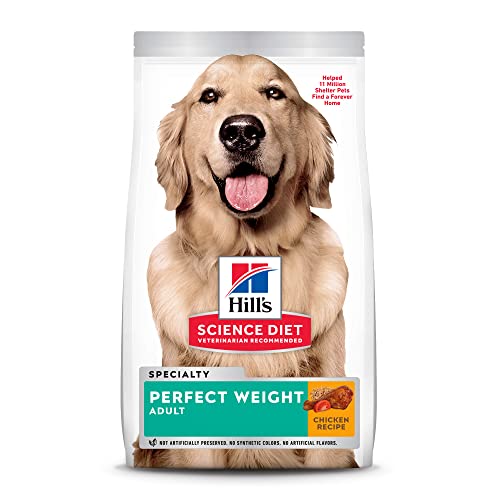
Hill's Science Diet Adult Perfect Weight, Chicken Recipe
4.8 (7,214)If you only read this far, start here. It is the one weight loss food on this page that is clinically proven and still sold without a prescription, it keeps protein high so your dog holds onto muscle, and the full write-up further down explains exactly who it suits.
Price range: $45-$75 for a 28.5 lb bag
What Makes a Dog Food Good for Weight Loss
Not every bag labelled "light" or "weight control" is worth the shelf space. A genuinely effective weight loss dog food balances four things: fewer calories per cup, a higher protein-to-fat ratio, enough fiber to keep your dog feeling full, and a calorie count that is easy to portion consistently. Here is what each of those actually means on the label.
Calorie Density Is the Whole Game
Weight loss comes down to calories in versus calories out, and a weight management food simply makes the "in" side easier to control. A regular adult food might pack 400 or more calories per cup, while a true weight loss formula typically lands closer to 250 to 330 calories per cup. That difference means your dog can still eat a satisfying volume of food while taking in fewer calories, which is why measuring by cup matters far less than weighing the food. If you have not checked your dog's current food, look at the kcal per cup on the back of the bag; you will often be surprised how dense a standard formula really is.
Protein Protects Muscle While Fat Comes Off
When a dog is in a calorie deficit, the body does not only burn fat, it will also break down muscle unless protein stays high. The best weight loss foods keep protein at or above 30 percent of calories so your dog holds onto the lean tissue that keeps their metabolism running. This is why a generic senior or "light" food that simply drops fat and protein together is a poor choice; it encourages muscle loss that leaves your dog weaker and hungrier.
Fiber and Moisture Control Hunger
An overweight dog is often a hungry dog, and a food that keeps your dog satisfied between meals makes the whole plan far easier on both of you. Soluble fiber slows digestion and keeps blood sugar steady, while insoluble fiber adds bulk that triggers fullness signals. Fresh foods and high-moisture formulas help too, because water adds volume without adding calories. The hungriest dogs, especially Labradors and Beagles, respond best to foods with notably high fiber or to a veterinary satiety diet.
L-Carnitine Gives Fat Metabolism a Boost
Many weight management formulas add L-carnitine, a compound that helps the body shuttle fat into the cells where it is burned for energy. It is not a magic ingredient, but combined with a calorie deficit it supports fat loss while sparing muscle. When you compare two otherwise similar formulas, the one with L-carnitine listed in the ingredients is usually the better choice for an overweight dog.
Portion Control Decides the Outcome
The most expensive diet food in the world will not help if you free-feed or guess portion sizes. A weight loss food only works when every meal is measured, ideally on a kitchen scale, and the total daily calories are set for your dog's target weight, not their current weight. Many owners find an automatic pet feeder with set portion sizes helpful, because it removes the guesswork and the temptation to top up the bowl through the day.
How Many Calories Should an Overweight Dog Eat?
Obesity is the most common nutritional disease in dogs. Surveys by the Association for Pet Obesity Prevention regularly find that around 56 percent of dogs in the United States are overweight or obese, and the number keeps creeping up. The good news is that this is one of the few health problems you can reverse with a feeding plan, as long as the plan is safe and consistent.
The goal is a mild, steady calorie deficit, not a crash diet. Two guidelines from veterinary nutrition cover most of the plan.
Feed 60 to 70 Percent of Maintenance Calories
Start by working out roughly how many calories your dog needs to maintain their current, overweight body weight, then feed 60 to 70 percent of that number. As a rule of thumb, a resting dog needs about 70 calories times their body weight in kilograms raised to the power of 0.75. For a 30 kilogram dog, that works out to around 900 calories per day to maintain; at 65 percent, the starting target is roughly 585 calories per day. That is a starting point, not a prescription. Every bag has its own calorie density, so use the feeding chart as a baseline and adjust based on your dog's body condition every two weeks.
Target 1 to 2 Percent Body Weight Loss per Week
VCA's veterinary guidance on building a canine weight-reduction plan puts the target at 1 to 2 percent of initial body weight per week, and closer to 0.5 percent for a morbidly obese dog. For a 50 pound dog that is roughly half a pound to a pound a week. Slower than that usually means the deficit is too small. Plan for the process to take months rather than weeks, and expect maintenance afterwards to be a permanent habit rather than a finish line. The same guidance is why every food on this list keeps protein high: protein is what preserves lean muscle while the calories come down.
Quick Comparison of the 6 Best Dog Foods for Weight Loss
| Product | Best For | Prescription? | Price Range |
|---|---|---|---|
| Hill's Science Diet Perfect Weight | Overall best weight loss food | No | $45-$75 |
| Purina Pro Plan OM | Stubborn weight under vet care | Veterinary diet | $50-$90 |
| Royal Canin Satiety Support | Hunger control and begging | Veterinary diet | $55-$95 |
| The Farmer's Dog | Fresh, human-grade meals | No (subscription) | $2-$8/day |
| Blue Buffalo Life Protection Healthy Weight | Budget-friendly retail pick | No | $35-$60 |
| Wellness CORE Healthy Weight | High-protein grain-free | No | $45-$75 |
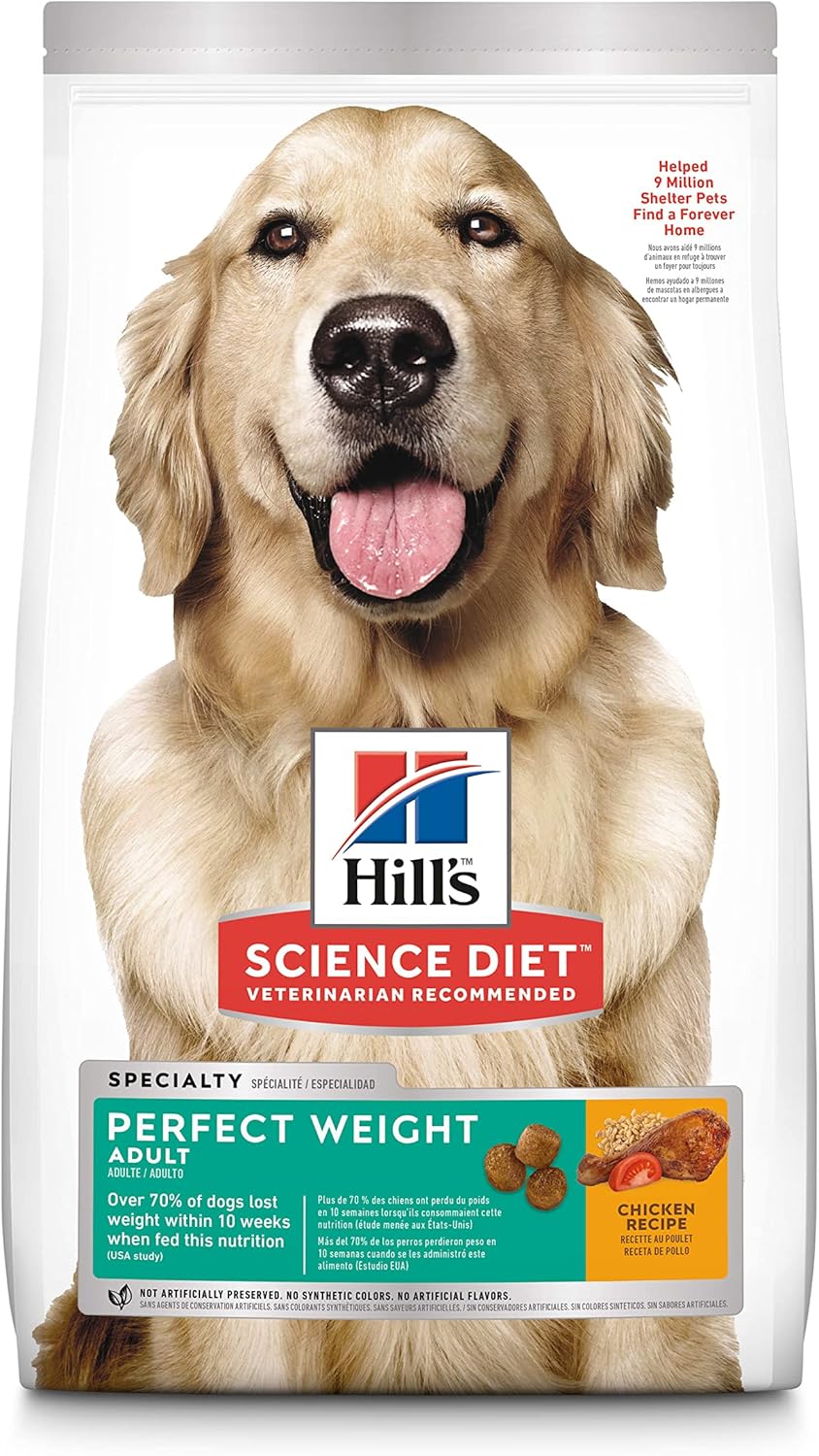
Hill's Science Diet Adult Perfect Weight, Chicken Recipe
4.8 (7,214)Hill's Perfect Weight is the easiest recommendation I can make to a worried owner, because it is the rare weight loss food that is both clinically proven and sold without a prescription. Hill's reports that in a feeding study, more than 70 percent of dogs lost weight within ten weeks on this formula. Real chicken is the first ingredient, protein stays high to protect muscle, and L-carnitine supports fat metabolism, all in a recipe that most dogs actually enjoy eating.
Pros
- Clinically proven weight loss in as little as 10 weeks
- Available without a vet prescription
- Real chicken first, with high protein to preserve lean muscle
- Contains L-carnitine to support fat burning
Cons
- Pricier per pound than standard adult foods
- Hungrier dogs may need a higher-fiber veterinary diet instead
Price range: $45-$75 for a 28.5 lb bag

Purina Pro Plan Veterinary Diets OM Overweight Management
4.7 (4,210)When a dog does not lose weight on a standard retail food, the problem is usually hunger breaking the plan, not a bad product. Purina Pro Plan OM is a veterinary diet formulated with high protein, low fat, and L-carnitine to create a controlled deficit while keeping your dog satisfied enough to stick with it. It is the food many vets reach for when a dog needs reliable, measurable weight loss under supervision.
Pros
- High protein, low fat profile designed for steady loss
- Vet-trusted for dogs who fail on retail diets
- L-carnitine helps preserve muscle during restriction
- Strong track record in owner reviews for visible results
Cons
- Veterinary diet, so you will want vet authorization and guidance
- More expensive than retail weight management foods
Price range: $50-$90 for an 18 lb bag

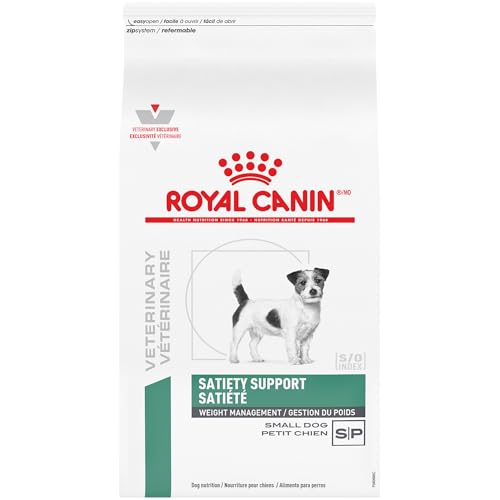
Royal Canin Veterinary Diet Canine Satiety Support
3.9 (270)Some dogs would eat until they burst, and for those dogs the answer is a food that makes them feel full on fewer calories. Royal Canin Satiety Support is built around an exceptionally high fiber content, around 15 percent, which keeps the stomach fuller for longer. Royal Canin reports that in a clinical study, a majority of dogs on the diet showed reduced begging behaviour, which is exactly the win an owner of a food-obsessed dog needs.
Pros
- Very high fiber keeps dogs feeling full and reduces begging
- High protein protects lean muscle during weight loss
- Added L-carnitine, glucosamine, and joint support
- Often works when lower-fiber diets fail
Cons
- Veterinary diet that needs vet guidance
- Some dogs dislike the texture and smell
- Premium price for the high-fiber formulation
Price range: $55-$95 depending on bag size

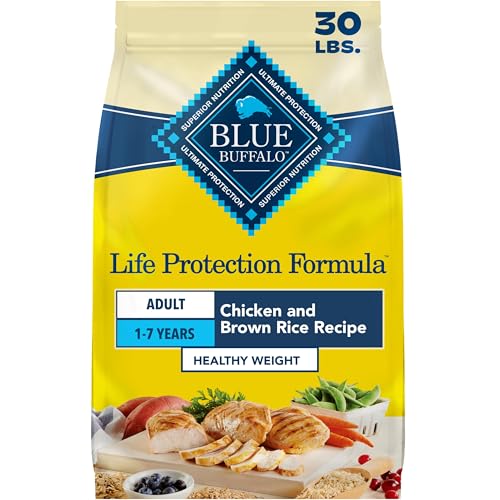
Blue Buffalo Life Protection Healthy Weight, Chicken and Brown Rice
4.7 (8,416)Blue Buffalo Healthy Weight proves you do not need a prescription or a specialist diet to start making progress. It keeps real deboned chicken as the first ingredient, trims the calories compared with the standard Life Protection formula, and adds L-carnitine to help with fat metabolism. The antioxidant-rich LifeSource Bits are a small bonus. It is the most affordable pick here that still counts as a genuine weight management food rather than a watered-down "light" label.
Pros
- Genuine calorie cut at a budget-friendly price
- Real chicken first with L-carnitine
- Widely available in stores and online
- Easy to find in large and small breed versions
Cons
- Lower fiber than the veterinary satiety diets
- Past recalls make some owners cautious
Price range: $35-$60 for a 30 lb bag

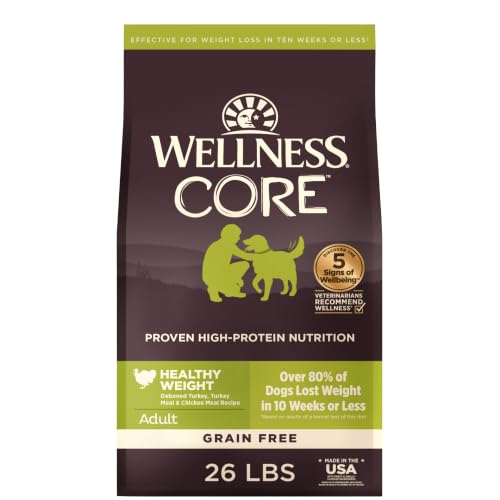
Wellness CORE Healthy Weight, Turkey and Chicken
4.5 (1,727)Wellness CORE Healthy Weight is the pick for owners who want a high-protein, grain-free recipe that supports muscle while cutting fat. The reduced-fat turkey and chicken recipe keeps protein high enough to protect lean tissue, which matters for dogs who are losing weight while staying active. It is also a strong choice for dogs with grain sensitivities that have struggled to find a weight management formula they can tolerate.
Pros
- High protein for muscle preservation during loss
- Grain-free recipe suits dogs with grain sensitivities
- Reduced fat without sacrificing protein quality
- Probiotics support digestion during the transition
Cons
- Grain-free diets have an FDA-noted DCM link, so run it by your vet
- Higher protein is not ideal for every dog, especially seniors with kidney concerns
Price range: $45-$75 for a 26 lb bag

The Farmer's Dog Fresh Meal Service
The Farmer's Dog is not a bag of kibble, it is a fresh, human-grade meal service that sends pre-portioned pouches to your door. What makes it genuinely good for weight loss is that every meal is formulated to your dog's target calories, so the portioning problem is solved before you ever open a pouch. The high moisture and real meat content keep dogs satisfied on fewer calories, and owners consistently report better energy and easier weight control. Because it is a subscription service rather than a grocery product, it is the priciest and least flexible option here.
Pros
- Meals portioned to your dog's target calorie needs
- Fresh, human-grade ingredients with high moisture
- Dogs feel full and satisfied on a controlled portion
- Removes portion guesswork entirely
Cons
- Most expensive option, priced per day
- Subscription model, not sold in stores or on Amazon
- Requires freezer space and planning
Typical cost: $2-$8 per day depending on dog size
When to Choose Which
Every overweight dog is a different puzzle, and the best food for a food-obsessed Beagle is not the best food for a senior Golden with joint aches. Use this cheat sheet to match the food to the dog.
Start with Hill's Perfect Weight if you want a clinically proven, no-prescription formula for a dog who is a few pounds over and otherwise healthy. It is the best all-around starting point.
Ask your vet about Purina Pro Plan OM if your dog has already failed to lose weight on a retail food, or needs a measurable, supervised plan. This is the veterinary workhorse for stubborn cases.
Choose Royal Canin Satiety Support if your dog is constantly hungry, begs at every meal, or scavenges for food. The high fiber is the strongest tool in this list against a food-obsessed appetite.
Pick Blue Buffalo Healthy Weight if you need a real weight management food on a tighter budget and your dog does well on a standard chicken and brown rice recipe.
Choose Wellness CORE Healthy Weight if your dog needs a grain-free, high-protein recipe or has food sensitivities that rule out grain-inclusive kibble. Confirm the grain-free choice with your vet first.
Choose The Farmer's Dog if you want to remove portion guesswork completely, prefer fresh food for your dog, and the higher monthly cost fits your budget.
Our Top Pick
Winner: Hill's Science Diet Adult Perfect Weight
Hill's Perfect Weight is our winner because it is the most complete package for the widest range of dogs. It delivers clinically proven weight loss, keeps protein high to protect muscle, includes L-carnitine for fat metabolism, and does not require a prescription or a vet visit to get started. It is not the cheapest option, but it is the most reliable one, and reliability is what a weight loss plan needs most.
For dogs who do not respond to a retail formula, Purina Pro Plan OM is the strongest veterinary alternative, and Royal Canin Satiety Support is the best choice when hunger is the real enemy. Whichever you pick, the winner is really the plan: a measured portion, a steady 1 to 2 percent weekly loss, and a weigh-in every week to keep it honest.
How to Help Your Dog Lose Weight: A Step-by-Step Plan
Switching bags is only half the battle. A weight loss plan works when the food, the portions, and the habits all line up. These are the steps I follow with my own dogs and the steps every vet I have spoken with recommends.
1. Get a Vet Check and an Ideal Weight
Before cutting calories, have your vet confirm your dog's body condition score and rule out thyroid disease or other medical causes of weight gain. Ask for a target weight in kilograms or pounds, then write it down. Every decision after this point is measured against that number.
2. Measure Every Meal with a Scale
Cups are inaccurate; kitchen scales are not. A scoop of the same kibble can vary by 20 percent depending on how tightly it settles. Weigh your dog's daily portion once in the morning and split it into two meals. If you struggle with consistency, an automatic feeder set to exact portions can do the job for you.
3. Count Treats as Calories
Treats are the silent saboteur of most dog diets. A single training biscuit can be 30 to 50 calories, and a handful a day can erase the entire deficit your food is creating. Keep treats to no more than 10 percent of daily calories, use low-calorie options like green beans or a few pieces of your dog's regular kibble, and subtract treats from the day's total.
4. Weigh Your Dog Weekly, Not Daily
Daily weight fluctuates with water and meals and will only frustrate you. Weigh once a week, at the same time and on the same scale, ideally in the morning before breakfast. Track the trend over four weeks. If your dog is losing 1 to 2 percent per week, the plan is working; if not, adjust the portion down slightly or talk to your vet.
5. Slow the Meals Down
Dogs who inhale food feel hungry again quickly because the fullness signal has no time to arrive. A slow feeder bowl stretches meal time and helps a weight loss portion feel more satisfying. It is a small, cheap tool that pays off more than almost any supplement for a food-motivated dog.
6. Add Exercise You Can Sustain
Weight loss in dogs is mostly diet, but movement keeps muscle and helps the calorie math. Start with what your dog can comfortably do, two short walks a day, then gradually build. Pay attention to breathing and heat, especially in overweight dogs who tire quickly. For breeds like Labrador Retrievers and Beagles that are prone to obesity, the exercise habit is part of long-term maintenance, not a temporary push.
7. Protect the Joints While Weight Comes Off
Extra weight presses hard on hips, elbows, and knees, so a losing dog needs joint support while the load reduces. Omega-3 fatty acids help, and many weight management foods already include them. If your dog shows stiffness, see our best joint supplements for dogs guide for options to pair with the diet.
Common Mistakes That Keep Dogs Overweight
Most failed weight loss plans fail in the same handful of ways. If progress has stalled, check these before changing food.
- Free feeding. Leaving a bowl full all day makes portion control impossible and is the single most common cause of canine weight gain.
- Guessing the scoop. Eyeballing portions slowly adds calories every day. Weigh the food.
- Forgetting the extras. Table scraps, treat jars, and the second scoop for "being good" all count. Log them for a week and you will see where the calories hide.
- Switching foods too fast. An abrupt change causes digestive upset that makes owners quit the plan. Transition over a full week.
- Expecting overnight results. Safe loss is 1 to 2 percent per week. A dog who needs to lose 10 pounds will take several months, and that is normal.
- Crash dieting. Cutting calories too hard triggers hunger, muscle loss, and rebound eating. Mild and steady wins every time.
How to Transition to a Weight Loss Dog Food
Moving to a new food should take a full seven days to protect your dog's digestion. Many overweight dogs also have sensitive stomachs, so going slowly matters even more. Follow this schedule:
- Days 1-2: 75% old food, 25% new food
- Days 3-4: 50% old food, 50% new food
- Days 5-6: 25% old food, 75% new food
- Day 7 onward: 100% new food, at the new measured portion
Weight Loss Foods for Senior Dogs
Senior dogs face a double challenge: they need fewer calories than they did in their prime, but their digestion and joints are less forgiving. A weight management food for an older dog should keep protein high to protect aging muscle, add joint support, and avoid an aggressive calorie cut. Hill's Perfect Weight and Royal Canin Satiety Support both fit that profile, and either can be combined with a joint supplement. For a deeper look at aging nutrition, read our best dog food for senior dogs guide. And if your senior dog also has a delicate stomach, the sensitive stomach dog food guide covers formulas that are gentle as well as calorie-aware.
There is also a useful conversation to be had about the two big veterinary brands in this lineup. If you are weighing Hill's against Purina, our Purina Pro Plan vs Hill's Science Diet comparison breaks down how their weight management lines differ in ingredients and calorie philosophy.
Frequently Asked Questions
Willemijn has kept animals for around 45 years. She did not have these particular items in her own home. What follows is her read on them, put together from research and from what she has seen at other owners' houses. We keep it separate from her hands-on notes on purpose, because the two are not the same thing.
Blue Buffalo Life Protection Adult Chicken & Brown Rice. Stool was a little softer than on Purina. He did like the taste. Drawback: The stool went a bit softer. 3 out of 5.
Hill's Adult 7+ Chicken (wet). Beer loved it, it is soft. Drawback: The price. 4 out of 5.
Willemijn is a friend of the founder and is not paid for this.