What Makes a Dog Food Right for an English Bulldog
English Bulldogs share a handful of traits that are specific to the breed, and a food that ignores them is a food that is guessing. None of these points require a lab test to state; they come from the breed's well-documented body shape and from what verified buyers on Amazon report again and again about these exact bags.
A Brachycephalic Muzzle Changes How They Eat
A Bulldog's short, flat face is the single most defining trait of the breed, and it affects eating long before it affects breathing. A round, standard-size kibble is harder for a short jaw to pick up and crush, which pushes some dogs to gulp pieces whole. Royal Canin designs its breed-specific kibble shape around this, aiming for pieces that are easier to grasp and that encourage slower chewing. That is the manufacturer's stated design goal, not something we measured ourselves with a stopwatch.
Skin Folds and Sensitive Skin Are a Known Breed Issue
The loose, folded skin that gives Bulldogs their look is also where moisture and irritation collect, and the breed is widely reported by owners and veterinary sources to run higher rates of skin sensitivity than many other breeds. A food built around skin support, often with added omega fatty acids, is a reasonable first line of defense alongside the fold-cleaning routine your vet can walk you through.
Sensitive Stomachs Show Up Often in Buyer Reviews
Across the reviews for the foods in this guide, loose stool and food sensitivity come up as a recurring theme specifically from Bulldog owners, more than from owners of other breeds reviewing the same bags. That is buyer-reported pattern, not a clinical statistic, but it is consistent enough across thousands of reviews that it is worth taking seriously when you are choosing a first food.
Bulldogs Gain Weight Easily and Exercise Less
Because their airway shape limits how much hard exercise they can safely do, Bulldogs burn fewer calories through activity than an active breed of the same size, which means extra calories show up as extra weight faster. Portion control and a calorie-aware food matter more for this breed than for most, and a Bulldog that is already overweight puts more strain on a frame already carrying a stocky build.
Joint Load Is Higher From the Start
A Bulldog's wide, heavy-chested build puts more baseline load on hips and elbows than a leaner breed carries, and that load only grows if weight creeps up. Keeping weight controlled through food is one of the more direct ways to protect those joints over the dog's life, alongside the kind of joint support covered in our best joint supplements for dogs guide.
Quick Comparison of the 5 Best Dog Foods for English Bulldogs
| Product | Best For | Price | Rating |
|---|---|---|---|
| Royal Canin Bulldog Adult | Overall best, breed-specific kibble | $99.99 | 4.7 (2,594) |
| Hill's Science Diet Sensitive Stomach & Skin | Itchy skin or sensitive stomach | $62.99 | 4.7 (20,176) |
| Purina Pro Plan Lamb & Oat Meal | Chicken-sensitive dogs | $54.48 | 4.6 (6,981) |
| VICTOR Bully Fuel | Active, muscular Bulldogs | $47.99 | 4.4 (263) |
| Hill's Science Diet Perfect Weight | Overweight Bulldogs | $92.99 | Not shown, see note below |

ROYAL CANIN Bulldog Adult Dry Dog Food, 30 lb Bag
4.7 (2,594)This is the one formula on this list built around the breed and nothing else. Royal Canin's breed-specific kibble shape is designed to suit a Bulldog's short jaw and typical bite pattern, and the recipe is tuned toward skin and coat support, which addresses the breed's two most commonly reported problem areas at once. For an owner who wants one bag that was designed with this exact dog in mind rather than adapted from a general formula, this is the starting point.
Pros
- Kibble shape designed around the breed's short jaw
- Formulated with skin and coat support in mind
- Large, consistent review base for a breed-specific product
- Widely stocked in a 30 lb size that suits multi-dog households
Cons
- Priced at the higher end of this list
- Breed-specific formulas cost more than general adult food of similar quality
Price: $99.99 for a 30 lb bag

Hill's Science Diet Sensitive Stomach & Skin Dry Dog Food, Adult, Chicken Recipe, 15.5 lb. Bag
4.7 (20,176)With over 20,000 ratings, this is by a wide margin the most-reviewed food on this list, and the volume alone says something: a huge number of owners, many of them clearly dealing with sensitive dogs, keep buying it. Hill's built this formula around easily digestible ingredients and added vitamin E and omega-6 fatty acids for skin support, which lines up directly with the two problem areas Bulldog owners mention most. If your Bulldog has had loose stool or flaky, itchy skin on a standard food, this is the most buyer-proven place to start.
Pros
- Largest verified review base of any food on this list
- Built for both stomach sensitivity and skin support together
- Widely available and easy to re-order
- No prescription required
Cons
- Chicken-based, so it won't help a dog specifically sensitive to chicken
- Smaller 15.5 lb bag size means more frequent repurchasing for a bigger dog
Price: $62.99 for a 15.5 lb bag

Purina Pro Plan Sensitive Skin and Sensitive Stomach Dog Food Lamb and Oat Meal Formula - 16 lb. Bag
4.6 (6,981)Some Bulldogs keep having skin or stomach trouble even on a sensitive-formula chicken food, and the chicken itself can be part of the problem. This Purina Pro Plan recipe swaps in lamb as the primary protein with oat meal in place of corn or wheat, which gives you a genuinely different ingredient base to test rather than just a different brand of the same thing. It is still built around the same sensitive skin and stomach goals as the Hill's formula above, just from a different protein source.
Pros
- Lamb and oat meal gives a real alternative to chicken-based formulas
- Strong review base with nearly 7,000 ratings
- Built specifically around sensitive skin and sensitive stomach
- Lower price than the Royal Canin and Hill's Perfect Weight options
Cons
- Not breed-specific, so kibble shape is standard rather than Bulldog-tuned
- Switching protein sources still requires a gradual transition
Price: $54.48 for a 16 lb bag
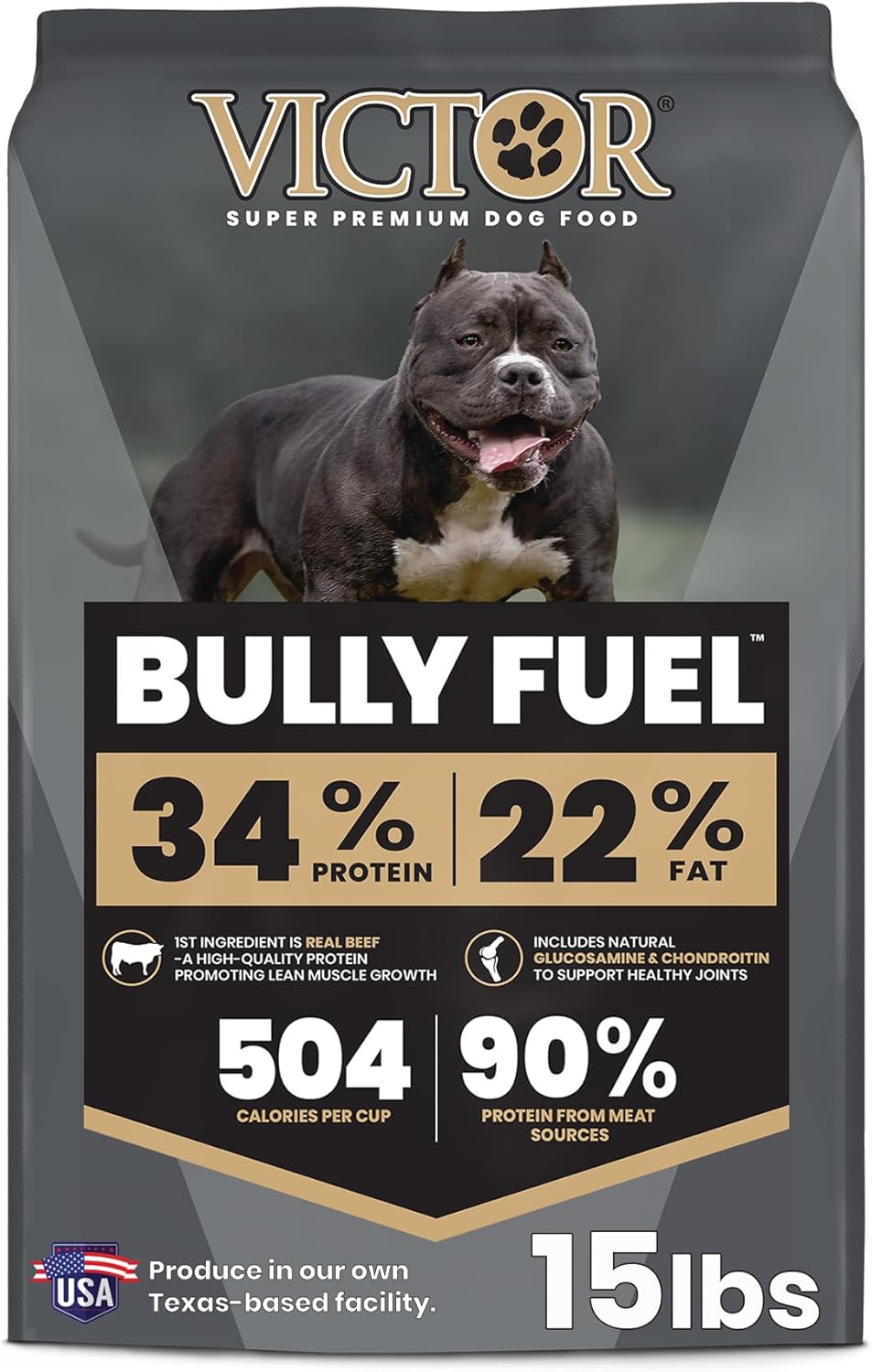
VICTOR Bully Fuel Dry Dog Food - High-Calorie Formula for Muscle, 15 lb
4.4 (263)Not every Bulldog is overweight, and some owners are working the opposite problem: a lean, muscular Bulldog that needs more calories and protein to hold its condition, especially one that does structured exercise or weight-pulling. VICTOR markets Bully Fuel specifically at this use case, naming it after the "bully breeds" and building it as a high-calorie formula aimed at supporting muscle. It has the smallest review base on this list, so weigh that against how well it targets a specific, less common need.
Pros
- Marketed specifically at bully breeds, including Bulldogs
- Higher calorie density suits a lean, active, or working dog
- Smaller 15 lb bag size is easier to keep fresh
Cons
- Far fewer verified reviews than the other options here
- Wrong choice for a Bulldog that already needs to lose weight
Price: $47.99 for a 15 lb bag

Hill's Science Diet Adult Perfect Weight Dry Dog Food, Chicken & Brown Rice, 25 lb. Bag
Because Bulldogs tolerate hard exercise poorly, weight that creeps on tends to stay on unless the food itself controls calories. Hill's Perfect Weight is formulated to help with gradual weight loss while keeping protein high enough to protect lean muscle during the process, which matters for a breed that is already carrying a heavy, stocky frame on joints that do not need extra strain. We could not verify a current star rating or review count for this exact listing at the time of writing, so we are not displaying one rather than guess. Check the live Amazon listing for current reviews before you buy.
Pros
- Formulated for gradual, protein-sparing weight loss
- No prescription required
- Large 25 lb bag size
- From a brand with a long track record in weight-management food
Cons
- Star rating and review count unverified for this listing as of writing
- A weight-loss food only works alongside measured portions, not instead of them
Price: $92.99 for a 25 lb bag
When to Choose Which
Bulldogs are not a one-size-fits-all breed when it comes to food, because the breed's known risk areas, skin, stomach, jaw shape, and weight, don't all show up in the same dog at once. Use this to match the food to the Bulldog in front of you.
Start with Royal Canin Bulldog Adult if your Bulldog doesn't have a diagnosed sensitivity and you want a food designed around the breed from the ground up, kibble shape included.
Choose Hill's Sensitive Stomach & Skin if your dog already shows itching, flaking, or loose stool on a standard chicken-based food. The review volume here is the strongest signal on this list that it works for a lot of dogs with exactly this problem.
Choose Purina Pro Plan Lamb & Oat Meal if you've already tried a chicken-based sensitive formula and your dog is still reacting. A genuinely different protein source is the next sensible test.
Choose VICTOR Bully Fuel if your Bulldog is lean, muscular, or working hard physically and needs more calories rather than fewer.
Choose Hill's Perfect Weight if your Bulldog is already overweight and your vet has confirmed a calorie-controlled plan is the right next step.
Our Top Pick
Winner: ROYAL CANIN Bulldog Adult Dry Dog Food
For a typical healthy adult Bulldog with no diagnosed sensitivity, Royal Canin's breed-specific formula is the most complete match: a kibble shape designed around the breed's jaw, a recipe tuned toward the skin support this breed commonly needs, and a review base large enough to trust at 2,594 ratings.
If your dog already has a specific problem, skin, stomach, weight, or needs more calories rather than fewer, one of the other four picks targets that problem more directly than a general breed formula would. Match the food to the dog you actually have, not the dog on the bag.
How to Switch Your Bulldog to a New Food
A Bulldog's reported stomach sensitivity makes a slow transition more important than it would be for a less sensitive breed. Many Bulldog owners also deal with sensitive stomach issues more generally, so a rushed switch raises the odds of loose stool that could otherwise be avoided. Follow this schedule over a full week:
- Days 1-2: 75% old food, 25% new food
- Days 3-4: 50% old food, 50% new food
- Days 5-6: 25% old food, 75% new food
- Day 7 onward: 100% new food, at the measured portion
Feeding and Weight Tips Specific to This Breed
Weigh Every Meal
Because Bulldogs gain weight easily and lose it slowly due to limited exercise tolerance, a kitchen scale is a better tool than a measuring cup for this breed specifically. A scoop that is 10 percent too generous, repeated twice a day, adds up fast on a dog that is not burning it off on long runs.
Slow the Meal Down
A Bulldog that gulps food due to its short jaw swallows more air, which can contribute to gas and bloating that this breed is already prone to. A slow feeder bowl forces smaller bites and more chewing, which can help with both the air-swallowing and the overeating.
Keep Teeth and Jaw Healthy
A Bulldog's bite is already unusual, and dental health plays into how comfortably they can eat a harder kibble. Pair the right food with appropriate dental care; our best dog dental chews guide covers options sized and textured for a range of jaw shapes.
Support the Joints Early, Not Late
Given the breed's naturally heavier, wider build, joint strain is not a senior-only concern for Bulldogs the way it might be for a leaner breed. A joint supplement alongside a weight-appropriate food is a reasonable early step; see our best joint supplements for dogs guide for options.
Walking Gear Matters Too
Bulldogs can pull hard despite their size, and a harness that doesn't put pressure on the throat matters more for a brachycephalic breed than for most others, since airway strain is already a breed concern. Our best dog harness for pulling guide has options built around exactly this kind of neck and throat sensitivity.
Reward Without Overfeeding
Treats count toward the daily calorie total just as much as meals do, and a food-motivated Bulldog can undo a carefully portioned diet one biscuit at a time. A long-lasting chew, like the ones in our Nylabone chew toy review, can satisfy the urge to chew and be rewarded without adding meaningful calories the way a training treat does.
Common Mistakes Bulldog Owners Make With Food
- Treating the breed like a generic large dog. A Bulldog's jaw shape, skin folds, and airway all change what "good food" means, and a food chosen without those in mind is a guess.
- Free feeding. Leaving a full bowl out all day removes any control over the calorie intake that this breed can least afford to lose.
- Switching food the moment skin or stomach issues appear. A single bad week isn't proof the food is wrong; give a genuine change, like a different protein source, a real trial of several weeks unless your vet says otherwise.
- Ignoring treat calories. On a dog already prone to weight gain, treats are often the part of the diet owners forget to count.
- Skipping the vet before a diet change. Skin and stomach symptoms can have causes other than food, and ruling those out first saves money and false starts.