Sensitive Stomach Dog Food: Key Facts at a Glance
Definition: Sensitive stomach dog food is a complete diet formulated with highly digestible proteins, limited ingredients, or added prebiotics and probiotics to reduce vomiting, diarrhea, gas, and bloating in dogs with digestive sensitivity. The best formulas pair a single, gentle protein with easily digested carbohydrates.
- Common triggers: Chicken, beef, dairy, wheat, and high-fat recipes are the most frequently reported dietary triggers in sensitive dogs.
- Transition rule: Change food gradually over 7 to 14 days; a sudden switch is itself a common cause of loose stools.
- Single protein helps: Limited ingredient diets with one novel protein, like salmon or turkey, make elimination trials possible.
- Probiotics: Guaranteed live probiotics support gut bacteria balance and are a proven tool for chronic digestive upset.
- Prebiotic fiber: Ingredients like beet pulp and chicory feed good gut bacteria and firm up stools.
- Fat matters: Lower fat recipes are easier to digest; high fat is a common trigger for diarrhea in sensitive dogs.
- Wet vs dry: Wet food adds moisture and is often easier on the stomach, but dry kibble is more cost-effective per meal.
- Breed connection: Flat-faced and small breeds, as well as breeds prone to food allergies, are over-represented among sensitive stomach cases.
- Vet first: Persistent vomiting, blood in stool, or weight loss warrants a vet visit before any diet change.
- Feeding trials: Give any new sensitive formula a full 4 to 6 week trial before judging results.
- Top reviewed: The most-reviewed sensitive formulas, like Purina Pro Plan Sensitive and Hill's Sensitive Stomach, hold 4.8-star ratings across 14,000+ reviews.
Why Do Dogs Get Sensitive Stomachs?
Quick answer: Dogs get sensitive stomachs from food triggers, stress, eating too fast, or underlying conditions; identifying the trigger is the first step to fixing it.
A sensitive stomach in dogs is more common than most people think. It can be caused by food allergies, intolerances to specific proteins or grains, eating too fast, stress, or a digestive system that simply reacts badly to low-quality ingredients. Some breeds are genetically predisposed to digestive issues: German Shepherds, Great Danes, and Border Collies tend to have more sensitive guts than average.
The signs are usually clear: frequent vomiting, loose stools, excessive gas, or a dog that seems uncomfortable and lethargic after eating. The good news is that switching to the right food resolves most cases within 2 to 4 weeks, without any medication needed.
What to Look for in Dog Food for Sensitive Stomachs
Quick answer: Look for a single gentle protein, limited ingredients, low fat, and added probiotics or prebiotics; avoid chicken, beef, wheat, and high-fat recipes.
Not all "sensitive stomach" labels mean the same thing. Here is what actually matters when you are reading the bag:
- Limited ingredients: Fewer ingredients means fewer potential triggers. Look for a single, named protein source at the top of the list.
- Highly digestible proteins: Chicken, turkey, and salmon are easier on digestion than beef or pork for most dogs.
- No artificial additives: Preservatives, artificial colors, and synthetic flavors can irritate a sensitive gut over time.
- Added probiotics or prebiotics: These support healthy gut bacteria and measurably improve digestion in clinical studies.
- Avoid common allergens: Wheat, corn, soy, dairy, and eggs are the most common food triggers. Grain-free options help many dogs but are not necessary for all.
- Life stage match: Puppies with sensitive stomachs need a formula designed for growth. Adult formulas do not meet their nutritional needs.
Before you buy: grab my checklist
The exact list I run through before recommending any pet product: ingredient red flags, real-vs-advertised specs, and the cost math brands hope you skip.
No spam. Just occasional research, straight from me.
Top 5 Dog Foods for Sensitive Stomachs in 2026
Quick answer: The top sensitive formulas pair digestible proteins with prebiotics and probiotics; Purina Pro Plan Sensitive and Hill's Sensitive Stomach lead the list.
We evaluated dozens of options based on ingredient quality, customer reviews, vet recommendations, and value for money. Here are the five best options across different needs and budgets.

Purina Pro Plan Sensitive Skin & Stomach
The most reviewed sensitive stomach dog food on Amazon for good reason. Purina Pro Plan uses salmon as the first ingredient, includes live probiotics for digestive health, and is backed by over 400 Purina scientists and veterinarians. It consistently outperforms pricier options in owner satisfaction surveys and delivers visible results within two to three weeks for most dogs.
- Real salmon as first ingredient
- Live probiotics included
- Excellent price per pound
- Most reviewed option available
- Visible results within 2–3 weeks
- Contains oatmeal and rice (not grain-free)
- Strong fish smell can linger
- Not suitable for dogs with fish allergies

Hill's Science Diet Sensitive Stomach & Skin
The gold standard for vet-recommended sensitive stomach food. Developed with veterinarians, this formula uses easy-to-digest ingredients, prebiotic fiber for healthy gut bacteria, and omega-6 fatty acids for skin and coat health. It is the most commonly recommended option by vets worldwide and is available in both adult and puppy formulas. If your vet has told you to switch foods, this is usually what they mean.
- Veterinarian formulated and recommended
- Available in adult and puppy versions
- Improves coat condition alongside digestion
- Prebiotic fiber for gut health
- Higher price point than Purina
- Contains chicken by-product meal
- Not grain-free

Blue Buffalo Basics Limited Ingredient
The best option for dogs with food allergies or multiple sensitivities. Blue Buffalo Basics uses a single protein source, turkey or salmon, and a genuinely limited number of carbohydrate ingredients to minimize allergic reactions. No corn, wheat, soy, dairy, or eggs. If you have been through elimination diets with your dog and nothing has worked, this limited ingredient approach is the cleanest available at this price point.
- Single protein source: easy to track triggers
- No common allergens (no corn, wheat, soy, dairy, eggs)
- Real meat as first ingredient
- Grain-free formula
- Premium price point
- Some picky dogs dislike the taste
- Smaller bag sizes available

Royal Canin Digestive Care
Royal Canin's Digestive Care formula is specifically engineered to support digestive health through highly digestible proteins and a balanced fiber blend of prebiotics and beet pulp. It improves stool quality noticeably fast, often within one week, which is the clearest visible sign that a formula is working. This is a strong choice for dogs that have chronic digestive issues rather than simple food sensitivities.
- Clinically proven formula
- Improves stool quality within one week
- Highly palatable: good for picky eaters
- Prebiotics and beet pulp fiber blend
- Most expensive option on this list
- Corn is the second ingredient
- Not grain-free
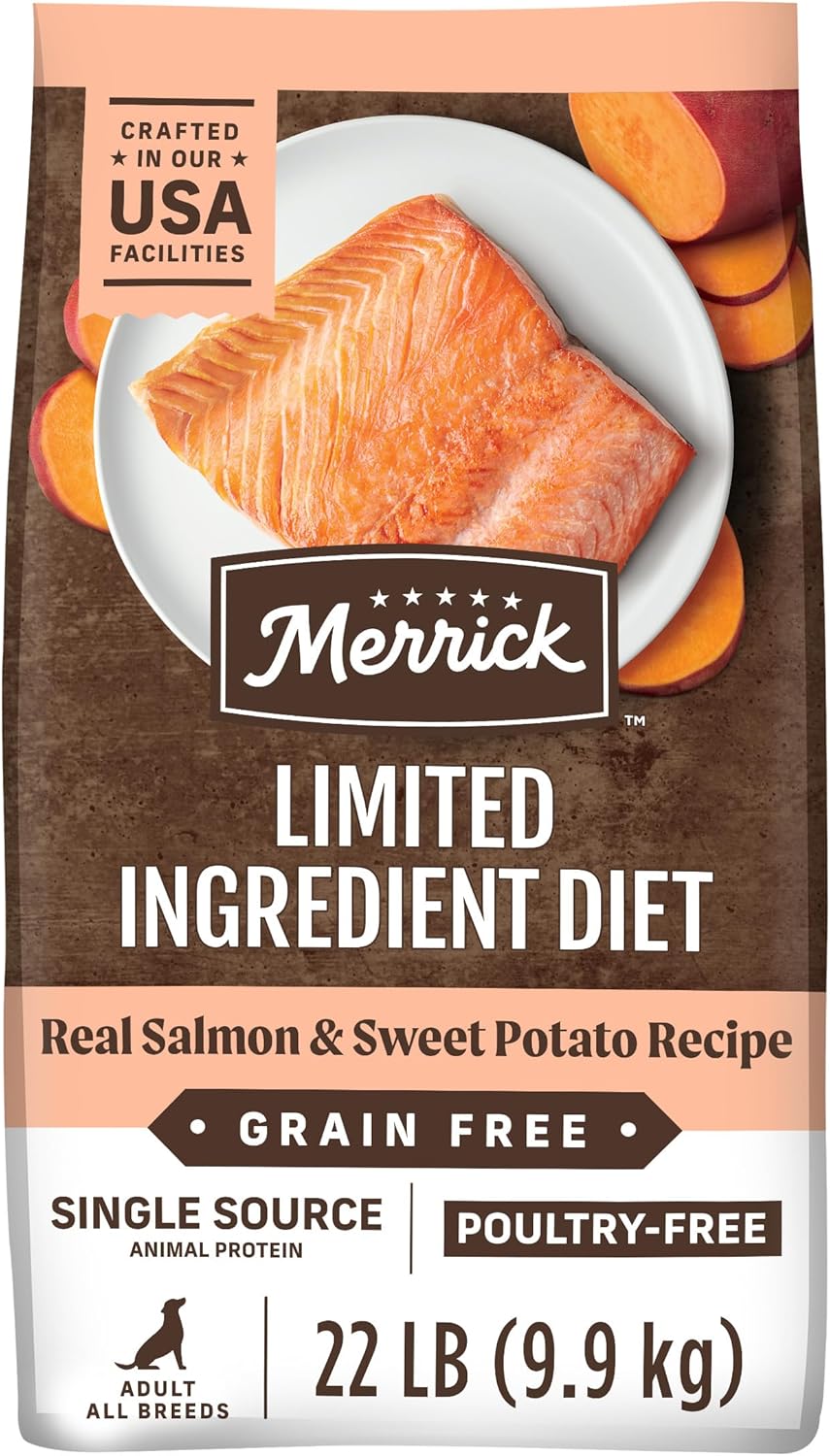
Merrick Limited Ingredient Diet Salmon
Merrick's Limited Ingredient Diet is grain-free and uses deboned salmon as the only animal protein source. Made in the USA with no artificial colors, flavors, or preservatives. A clean, transparent option for dogs with multiple food sensitivities who have not responded to chicken or turkey-based formulas. The short ingredient list makes it easy to rule out allergens systematically.
- Made in the USA
- Single animal protein: easy allergen tracking
- Grain-free formula
- No artificial ingredients
- Higher cost per pound
- Smaller bag sizes available
- Some dogs prefer poultry-based food
Quick Comparison Table
| Product | Price Range | Grain-Free | Probiotics | Rating |
|---|---|---|---|---|
| Purina Pro Plan | $35–$55 | ★ 4.8 | ||
| Hill's Science Diet | $45–$65 | ★ 4.8 | ||
| Blue Buffalo Basics | $50–$70 | ★ 4.7 | ||
| Royal Canin | $60–$85 | ★ 4.6 | ||
| Merrick LID | $55–$75 | ★ 4.5 |
Our Final Recommendation
For most dogs with sensitive stomachs, Purina Pro Plan Sensitive Skin & Stomach offers the best combination of quality, proven results, and value. With over 22,000 Amazon reviews and live probiotics built in, it delivers results without breaking the budget.
If your dog has specific food allergies or has failed multiple formulas, go with Blue Buffalo Basics or Merrick LID for the cleanest limited-ingredient approach. If your vet has specifically recommended a food switch, Hill's Science Diet is the standard recommendation.
See Purina Pro Plan on AmazonBest Dog Food for Puppies with Sensitive Stomachs
Quick answer: Puppies with sensitive stomachs need a growth-formulated food with a single protein and moderate fat; transition slowly and feed small frequent meals.
Puppies with sensitive stomachs need a formula specifically designed for growth. Adult sensitive stomach formulas do not meet the higher protein, calcium, and DHA requirements of a developing puppy. Never feed a puppy an adult-only formula, even if it seems gentler.
When transitioning a puppy, go even slower than the standard 7-day plan: stretch it to 10 to 14 days, since a puppy's digestive system is still developing and more sensitive to abrupt changes. Watch for changes in stool consistency as your primary indicator of how the transition is going.
If your puppy is a large breed (expected adult weight over 50 lbs), make sure the puppy formula is specifically labeled for large breeds, since large breed puppies have different calcium-to-phosphorus ratios to support healthy bone development.
Sensitive Stomachs by Breed
Quick answer: Breeds prone to food allergies and digestive issues, including flat-faced and small breeds, benefit most from limited-ingredient sensitive formulas.
Some breeds are significantly more prone to digestive issues than others due to genetics, anatomy, or metabolism. Here is what to know for the most commonly affected breeds.
German Shepherd
Prone to exocrine pancreatic insufficiency and inflammatory bowel disease. Highly digestible proteins and added digestive enzymes help most. Hill's Science Diet and Royal Canin are frequently recommended by vets for this breed.
Great Dane
Deep chest makes them prone to bloat (GDV). Feed smaller, more frequent meals and avoid exercise right after eating. A large breed-specific formula with controlled fat content is important.
Boston Terrier
Brachycephalic (flat-faced) breeds swallow more air when eating, causing gas and bloating. Slow feeder bowls combined with a sensitive stomach formula dramatically reduce symptoms for most Boston owners.
Chihuahua
Small breeds have fast metabolisms and can become hypoglycemic easily. A small breed sensitive stomach formula with smaller kibble size and higher calorie density is the right approach: regular adult kibble is often too large and rich.
Pitbull
Pitbulls are prone to food allergies, particularly to chicken and beef. A limited ingredient diet with a novel protein like salmon or turkey often resolves chronic stomach issues that have not responded to standard sensitive stomach formulas.
Labrador
Labs are notorious for eating too fast, which causes vomiting and gas regardless of food quality. A slow feeder bowl alongside a sensitive stomach formula is often enough to resolve most issues without changing food at all.
How to Transition Your Dog to a New Food
Quick answer: Switch food gradually over 7 to 14 days, mixing increasing amounts of the new food, to avoid the loose stools a sudden change causes.
Never switch dog food abruptly: it will make a sensitive stomach significantly worse, even if the new food is better. Follow this 7-day transition plan and extend it to 10–14 days if your dog is especially sensitive:
- Days 1–2: 75% old food, 25% new food
- Days 3–4: 50% old food, 50% new food
- Days 5–6: 25% old food, 75% new food
- Day 7+: 100% new food
Also consider adding a plain probiotic like Purina FortiFlora during the transition period. It helps stabilize gut bacteria during the switch and noticeably reduces loose stool for most dogs.
Wet Food vs Dry Food for Sensitive Stomachs
Quick answer: Wet food adds moisture and is often gentler on the stomach, but dry kibble is cheaper and more convenient; both work if the protein is gentle.
Both wet and dry food can work well for sensitive-stomach dogs. Wet food has higher moisture content which can ease digestion and is often more appealing to dogs that have lost interest in eating due to GI discomfort. However, high-quality dry kibble formulated for sensitive stomachs is equally effective for most dogs and significantly cheaper per calorie.
If you want to try wet food, the same brand options apply: Purina Pro Plan and Hill's Science Diet both offer wet versions of their sensitive stomach formulas. You can also mix wet food with dry kibble as a halfway approach that improves palatability without the full cost of an all-wet diet.
Homemade Bland Diet for Acute Flare-Ups
Quick answer: For acute flare-ups, a short bland diet of boiled chicken and white rice settles the stomach before transitioning back to a sensitive formula.
If your dog is in the middle of a digestive flare-up, vomiting, diarrhea, refusing food, a short-term homemade bland diet can settle their stomach while you arrange a switch to a better long-term formula. This is not meant to replace a nutritionally complete kibble, but it is the safest way to give a distressed digestive system a rest for 2 to 3 days while keeping your dog fed.
The classic bland diet recipe:
- 50% boiled white rice: Cook it plain with no salt, oil, or seasoning. White rice is highly digestible and binding, which helps firm up loose stools. Brown rice is more nutritious long-term but harder to digest during a flare-up: stick to white.
- 50% boiled lean protein: Skinless, boneless chicken breast or 93% lean ground turkey, boiled and drained. No salt, no fat, no skin. Fat is hard on an inflamed digestive system.
- Optional: a spoonful of plain canned pumpkin (not pumpkin pie filling. It must be 100% pumpkin with no added sugar or spices). Pumpkin provides soluble fiber that naturally firms up stools and soothes the gut lining.
Feed small, frequent portions: about a quarter of their normal meal size every 4 to 6 hours, not one or two large meals. A smaller digestive load is easier to process when the gut is inflamed. Continue for 2 to 3 days maximum, then begin the transition plan above toward a complete sensitive stomach formula.
When a Food Change Is Enough, and When It Is Not
Quick answer: If a food change does not resolve symptoms in 4 to 6 weeks, or if you see blood, vomiting, or weight loss, see a vet.
Most dogs with sensitive stomachs improve with the right food alone. But not all digestive symptoms are food-related. Here is how to tell the difference between a food sensitivity you can solve at home and a medical condition that needs a vet.
There is a line the veterinary literature draws that is worth knowing, because it is more useful than any symptom list. The Merck Veterinary Manual defines a digestive problem as chronic once it has lasted, or kept coming back, for more than three weeks. Before that line you are managing an upset stomach. After it you are managing a condition, and the food is at best half the answer.
The same source is blunt about what does not wait for three weeks: vomiting more than once or twice a day, or with blood, belly pain, weakness, fever or weight loss, needs a proper examination rather than a new bag of food. Weight loss is the one owners most often explain away, and it is the one that should worry you most.
Symptoms That Usually Improve with a Food Change
These signs typically point to a dietary trigger and resolve within 2 to 4 weeks on a sensitive stomach formula:
- Occasional vomiting that happens shortly after eating (not vomiting bile on an empty stomach)
- Soft or loose stools that firm up with probiotics or a food switch
- Excessive gas that follows specific meals or ingredients
- Mild bloating or stomach gurgling that is not accompanied by pain
- Itching or ear infections alongside digestive symptoms (suggests a food allergy)
- Symptoms that clearly worsen after introducing a new treat, table scrap, or food brand
In these cases, switching to one of the five foods reviewed above and following the 7-to-14-day transition plan is usually enough. Track symptoms in a simple notebook or phone note during the transition: objective data makes it much easier to tell if things are improving week over week.
Symptoms That Need a Vet, Not Just a Food Change
These red-flag signs suggest an underlying medical condition that food alone will not fix. A vet visit is the right next step, not another food experiment:
- Blood in vomit or stool (fresh red blood or dark, tarry stool)
- Vomiting multiple times a day, every day, for more than 48 hours
- Significant weight loss over weeks or months despite a normal appetite
- Lethargy, depression, or obvious pain alongside digestive symptoms
- Chronic diarrhea that does not respond to any food change within 4 weeks
- Vomiting bile (yellow foam) on an empty stomach, especially in the morning
- Symptoms that began suddenly after a known toxin exposure (chocolate, xylitol, grapes, human medication)
Key decision rule: If your dog is still bright, active, eating with appetite, and having soft-but-not-watery stool, a food change is the right first step. If your dog is clearly unwell, not just having digestive symptoms but actually sick, skip the food trial and go straight to the vet. You can always switch foods afterward, once you know what you are dealing with.
Feeding Habits That Reduce Sensitive Stomach Symptoms
Quick answer: Slow feeders, scheduled meals, and avoiding table scraps reduce sensitive stomach symptoms more than any single food change.
Sometimes the problem is not the food itself: it is how the dog eats it. Before you switch foods, try these habit changes that cost nothing and help many dogs within days:
- Split meals: Feed 3 smaller meals instead of 2 larger ones. A smaller volume of food at once is easier on the digestive system. For dogs prone to bilious vomiting, adding a small bedtime snack can prevent morning stomach acid buildup.
- Use a slow feeder bowl: Dogs that inhale their food in 30 seconds swallow air with every bite, which causes gas, bloating, and regurgitation. A slow feeder bowl forces them to eat over 5 to 10 minutes and dramatically reduces these symptoms for fast eaters. This alone solves the issue for many Labrador and Golden Retriever owners.
- Elevate the food bowl: For large and giant breed dogs, an elevated feeder reduces the amount of air swallowed and lowers pressure on the esophagus. This is especially helpful for breeds prone to bloat like Great Danes, German Shepherds, and Dobermans.
- No exercise right after meals: Wait at least 60 to 90 minutes after eating before walks, runs, or active play. Exercise diverts blood flow away from the digestive system and can trigger vomiting or, in deep-chested breeds, bloat.
- Consistent schedule: Feed at roughly the same times every day. Irregular meal timing stresses a sensitive digestive system. Dogs thrive on routine, and their gut function follows a circadian rhythm just like ours.
- Eliminate table scraps: Even small amounts of human food, especially fatty meat, dairy, or processed snacks, can trigger a flare-up in a sensitive dog. A single piece of bacon or cheese can undo weeks of progress.
What the Research on Probiotics Actually Shows
Probiotics get recommended constantly for sensitive stomachs, so it is worth being precise about what has actually been measured rather than repeating the marketing line that they are "proven." A 2019 randomized, placebo-controlled trial in Frontiers in Veterinary Science gave 60 dogs with acute diarrhea one of three treatments: a probiotic blend, the antibiotic metronidazole, or a placebo. Dogs on the probiotic reached formed stool fastest on average (3.5 days, versus 4.6 days on metronidazole and 4.8 days on placebo), but with only 20 dogs per group the difference did not reach statistical significance (p = 0.17). No dog in any group needed rescue antibiotics, and none had adverse effects from the probiotic.
So the honest read is narrower than "probiotics fix upset stomachs": in this trial they were not shown to work better than doing nothing, only numerically faster, in a sample too small to call it proven. What that does support is the practical, low-risk version most vets already recommend, which is what we say elsewhere on this page — a plain probiotic like Purina FortiFlora is safe to try during a food transition or a mild flare-up, and the same trial's biggest finding was actually against metronidazole, not for probiotics: routine antibiotics for uncomplicated acute diarrhea did not outperform placebo either. If symptoms are severe, prolonged, or your dog seems unwell beyond loose stool, that is a reason to call a vet rather than add another supplement.
Frequently Asked Questions
Also worth reading: Best Automatic Pet Feeders: feeding your dog on a consistent schedule with portioned meals is one of the most effective ways to reduce sensitive stomach symptoms. And if you have a cat in the house too, check out our Best Budget Cat Litter guide.
Willemijn has kept animals for around 45 years. She did not have these particular items in her own home. What follows is her read on them, put together from research and from what she has seen at other owners' houses. We keep it separate from her hands-on notes on purpose, because the two are not the same thing.
Purina Pro Plan Sensitive Skin & Stomach Salmon & Rice. His coat got a little glossier and the itching eased off a bit. Stool was good. Drawback: Dearer than the standard version. 4 out of 5.
Purina Pro Plan Large Breed Sensitive Skin & Stomach. Drawback: Pricey. 4 out of 5.
Blue Buffalo Basics Limited Ingredient Turkey & Potato. The diarrhoea eased, but it did not clear up completely. Drawback: It did not fully solve the problem. 3 out of 5.
Hill's Science Diet Sensitive Stomach & Skin Chicken. His stool got somewhat better, but he did not enjoy eating it. Drawback: The taste disappointed. 2 out of 5.
Willemijn is a friend of the founder and is not paid for this.