Why Dogs Develop Joint Issues
Joint wear in dogs comes from a mix of factors: normal aging cartilage breakdown, genetics (large and giant breeds are simply built with more joint stress per pound), previous injury, and excess body weight putting additional load on joints over years. Osteoarthritis affects a substantial share of senior dogs, but it is not exclusively an old-age condition: large breed dogs can show early joint stress well before what most owners think of as "senior."
The earlier signs are easy to miss because dogs are good at compensating: a slight hesitation before jumping into the car, a bit more stiffness after a long nap, taking stairs more carefully than they used to. Catching these signs early and starting a joint supplement preventively, rather than waiting for obvious limping, is where you get the most benefit.
What to Look for in a Joint Supplement
- Glucosamine and chondroitin: The two ingredients almost every joint chew is built on. The evidence behind them is weaker than the packaging suggests, and we go through it honestly below before you spend anything.
- Clinically studied dosing: Look for a supplement that states its glucosamine/chondroitin dose per serving rather than a vague "joint support blend": dosing matters for effectiveness.
- Omega-3 fatty acids: A strong complementary addition (either combined in the joint supplement or given separately as fish oil) that has independent anti-inflammatory benefits.
- Palatability: A supplement your dog will not reliably eat is useless. Chewable, flavored formats have much higher long-term compliance than powders or pills.
- MSM (methylsulfonylmethane): Often included alongside glucosamine/chondroitin, with some evidence supporting an additional anti-inflammatory effect.
Before you buy: grab my checklist
The exact list I run through before recommending any pet product: ingredient red flags, real-vs-advertised specs, and the cost math brands hope you skip.
No spam. Just occasional research, straight from me.
Do Dogs Actually Need Joint Supplements? What the Research Says
This section costs us money, because the honest answer thins out the case for the products below. We would rather you spend well than spend here.
Glucosamine and chondroitin: weaker than the packaging suggests
These two are in nearly every joint chew on the market, and the clinical evidence in dogs is poor. A 2022 systematic review and meta-analysis of enriched diets and nutraceuticals in canine and feline osteoarthritis reported what its authors describe as a very marked non-effect for chondroitin-glucosamine products, and concluded that they should no longer be recommended for pain management in dogs with osteoarthritis.
An earlier review of glucosamine and chondroitin use in dogs is gentler but lands in a similar place: the trials that exist are few and small, absorption and correct dosing in dogs are still unclear, and the one placebo-controlled study it examined found no significant improvement over placebo.
That does not make them useless and it does not make them dangerous. It makes them a low-risk experiment with a low expected payoff, which is a different purchase from the one the packaging describes.
Omega-3 fish oil: the ingredient with the better evidence
Fish oil is the one that holds up best. In a controlled trial measuring weight bearing on a force plate, 82 percent of dogs on a fish-oil-supplemented diet improved on peak vertical force against 38 percent of controls, which is an objective measurement rather than an owner's impression. A multicentre study found that dogs on a fish-oil diet could have their carprofen dose reduced, which matters because less painkiller is a real clinical outcome.
This is why Grizzly Salmon Oil sits high on our list despite being the least supplement-looking product on it.
The thing that beats every supplement
Weight. Fat tissue is inflammatory, and every extra kilo goes through the same joints. The nutritional-management literature puts body weight first and omega-3s second, and puts joint nutraceuticals nowhere near the top. If your dog is heavy and stiff, the supplement is the second thing to change.
So should you buy one?
- Reasonable: an older or predisposed dog that is otherwise well, where you want to try something low-risk alongside weight control and steady, moderate exercise.
- Reasonable: fish oil, on the evidence above, more or less regardless.
- Not reasonable: a dog that is limping now. That is a vet appointment. Diagnosed arthritis has treatments that work, and a chew is not one of them.
- Not reasonable: paying a premium for a proprietary blend that will not tell you the dose per serving.
Top Joint Supplements for Dogs in 2026
I compared these based on clinical ingredient dosing, verified buyer reviews, and how well they complement each other as part of a joint-health routine.
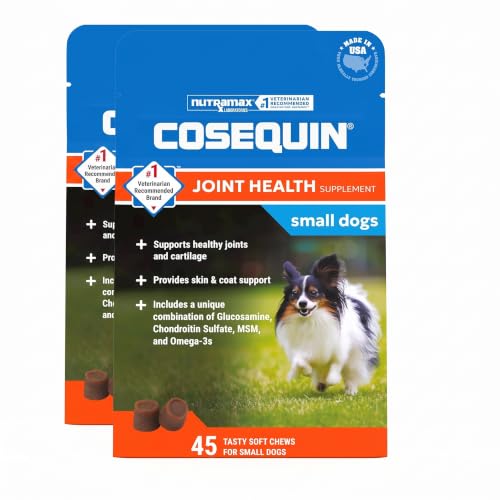
Nutramax Cosequin for Small Dogs
The number one vet-recommended joint supplement brand for dogs in the USA, in the small-dog dosing. Cosequin contains glucosamine, chondroitin, MSM, and omega-3s at clinically studied dosing. This specific size is formulated for small dogs — Nutramax sells separate medium and large/giant-breed sizes, so match the size to your dog's weight rather than buying this one for a bigger dog. Most owners report noticeable improvement within 4 to 6 weeks of consistent daily use.
- Number one vet recommended
- Clinically studied dosing
- Noticeable results in 4–6 weeks
- Excellent for senior dogs
- Takes 4–6 weeks to work: not immediate
- Dogs only, not formulated for cats
- Higher price point

Grizzly Salmon Oil
Pure wild Alaskan salmon oil that pairs well alongside a glucosamine/chondroitin supplement rather than replacing it: omega-3 fatty acids have an independent anti-inflammatory effect that complements joint-specific ingredients. Simply pump over food once daily. Most owners notice a shinier coat within two weeks, with joint benefits building more gradually alongside the primary supplement.
- Works for dogs and cats
- Independent anti-inflammatory benefit
- Easy pump-bottle dosing
- Bonus coat and skin improvement
- Strong fish smell
- Can stain surfaces if spilled
- Not a joint supplement on its own: best paired with glucosamine/chondroitin

Zesty Paws Multivitamin Bites
A comprehensive all-in-one supplement covering joints, digestion, immunity, and coat health rather than targeting joints alone. Good starting point for a healthy adult dog without diagnosed joint issues who you want to support preventively, though a dog with existing stiffness will likely need Cosequin's more concentrated, joint-specific dosing instead.
- Massive verified review base
- Covers multiple health areas, not just joints
- High palatability: dogs like the taste
- Lower glucosamine dose than a dedicated joint product
- Not strong enough alone for diagnosed arthritis
Ellevet Sciences CBD + CBDA Soft Chews: Worth a Look for Stubborn Joint Discomfort
If your dog still moves stiffly after a few weeks on a standard glucosamine and chondroitin chew, the Ellevet CBD + CBDA Soft Chews are the pairing worth considering. Ellevet combines a full-spectrum hemp extract with glucosamine and chondroitin in the same chew, and it is one of the few supplements in this category backed by published clinical data: a Cornell University College of Veterinary Medicine study reported improvement in 75% of dogs with joint discomfort. It costs more at around $89 to $99 for a 62-chew bag, so it is not a first-line buy, but for senior dogs that have not responded to conventional joint chews it is a genuinely different option. I research verified buyer reviews, ingredient labels, and spec sheets before recommending anything.
Check Price at Ellevet SciencesQuick Comparison Table
| Product | Price Range | Glucosamine/Chondroitin | Best For | Rating |
|---|---|---|---|---|
| Cosequin for Small Dogs | $15–$23 | Clinical dose | Small dogs, diagnosed stiffness | ★ 4.5 |
| Grizzly Salmon Oil | $18–$28 | (omega-3 instead) | Complementary anti-inflammatory | ★ 4.7 |
| Zesty Paws Multivitamin | $18–$30 | Lower dose, blended | Preventive, healthy adult dogs | ★ 4.8 |
Our Final Recommendation
If your dog is already showing stiffness or is a senior, start with Cosequin — the clinical dosing genuinely matters here, but buy the size matched to your dog's weight (this page links the small-dog version; Nutramax sells medium and large/giant sizes separately). Add Grizzly Salmon Oil alongside it for the complementary anti-inflammatory benefit.
For a healthy adult dog you want to support preventively without joint-specific concerns yet, Zesty Paws Multivitamin is a reasonable lower-cost starting point.
See Cosequin on AmazonWhich Breeds Need Joint Support Earliest
German Shepherd
Genetically prone to hip dysplasia. Preventive joint support from age 1-2 is worth discussing with your vet, especially for working or highly active dogs.
Labrador Retriever
High rates of hip and elbow dysplasia. Weight management combined with a joint supplement makes a meaningful difference given how prone Labs are to weight gain.
Great Dane
Giant breed size puts substantial cumulative joint stress. Many giant-breed owners start joint supplements as early as age 1, once bone growth has largely finished.
Golden Retriever
Moderate-to-high joint issue rates, often appearing by age 6-8. Watch for stair hesitation and reduced enthusiasm for fetch as early signals.
Dachshund
Long spine puts them at elevated risk for disc disease alongside joint issues. Weight control matters enormously here: excess weight dramatically increases spinal strain.
Small & toy breeds
Generally lower joint-issue rates than large breeds, though luxating patella (kneecap slipping) is a specific small-breed risk worth watching for.
Signs Your Dog Needs a Joint Supplement
- Slowness or hesitation getting up after resting
- Reluctance to jump onto furniture, into the car, or up stairs
- Stiffness that visibly improves after 10-15 minutes of walking ("warming up")
- Reduced enthusiasm for exercise or play compared to their normal behavior
- Licking or chewing at a specific joint
- Visible limping, even if intermittent
Managing the Cost of Joint Care Long-Term
Joint supplements are a relatively low ongoing cost, but if your dog does develop more advanced arthritis or needs imaging, medication, or surgery down the line, those costs can add up quickly: hip surgery in particular runs into thousands of euros without coverage. If you are in the Netherlands, our pet insurance guide covering PetSecur is worth reading while your dog is still young, since joint conditions that develop later are typically excluded as pre-existing if you wait to sign up.
If you are working through the rest of the setup, these go with this one: Best Dog Dental Chews: Keep Your Pup's Teeth Clean and Best Flea Treatment for Dogs: Complete Guide to Keeping Your Pup Itch-Free.
Frequently Asked Questions
Also worth reading: Best Pet Supplements & Health Products for a broader supplement roundup, and Best Dog Food for Large Breeds if joint stress is a concern for your big dog specifically.
Willemijn has kept animals for around 45 years. She did not have these particular items in her own home. What follows is her read on them, put together from research and from what she has seen at other owners' houses. We keep it separate from her hands-on notes on purpose, because the two are not the same thing.
ElleVet CBD + CBDA Soft Chews. Drawback: The price. 4 out of 5.
Willemijn is a friend of the founder and is not paid for this.