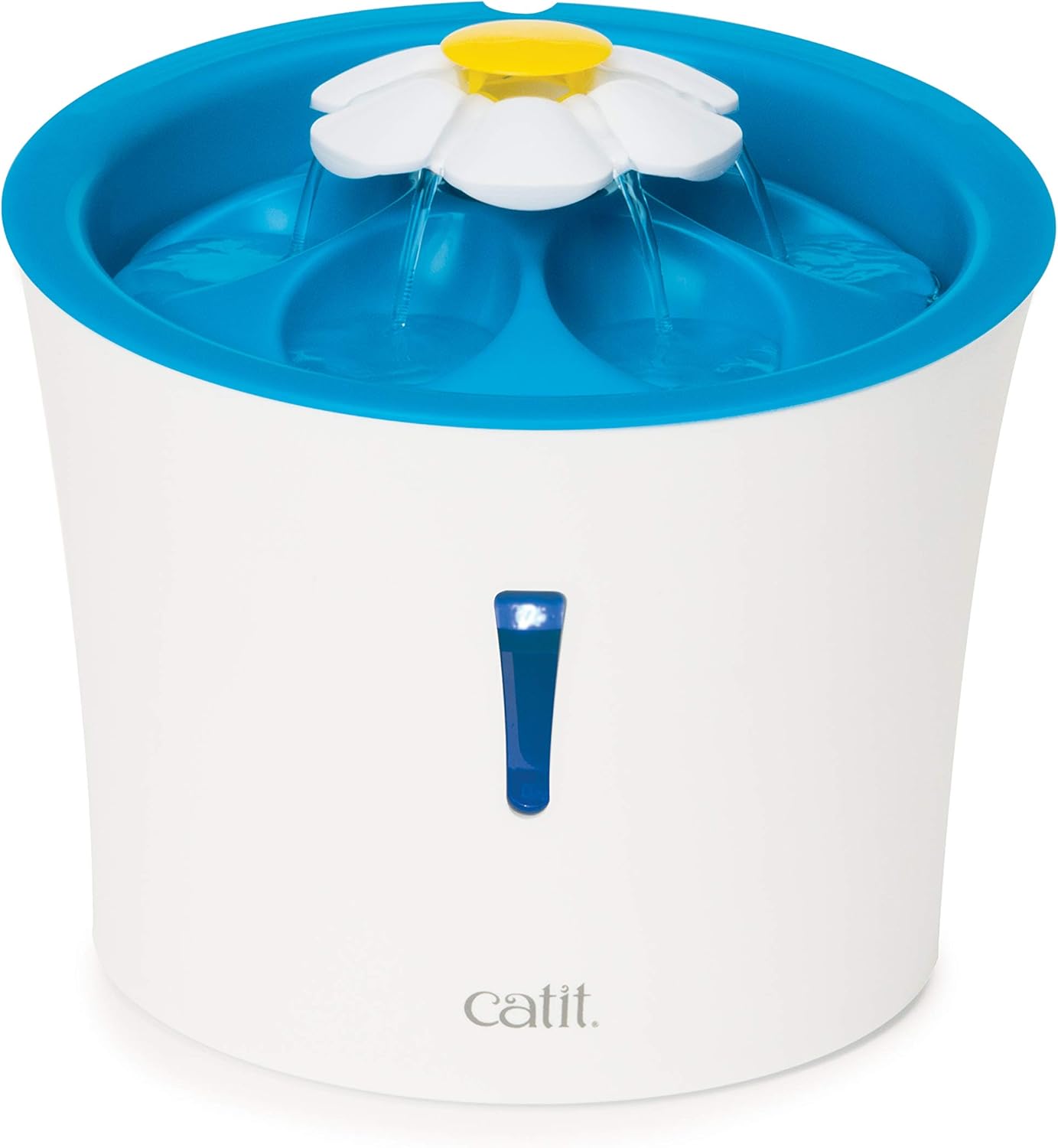
Catit Flower Fountain
4.3 (49,522)The Catit Flower Fountain is the one that started the whole brand's reputation, and after years on the market it still earns that top spot because the triple-action filter actually works and the flower top keeps even picky cats entertained. At 3 liters it handles a single-cat or small multi-cat home without constant refilling, and the pump is whisper quiet at night.
Pros
- Triple-action filter removes debris, softens water, and reduces bad tastes
- Three flow settings suit different drinking preferences
- Very quiet pump rated under 40 dB
Cons
- Flower top has small crevices that collect slime if not cleaned weekly
- Replacement filters cost adds up over time
Price range: $25-$35

Catit Senses 2.0 Water Fountain
4.1 (2,822)If you have two or three cats and you are tired of refilling a small bowl every other day, the Senses 2.0 is a serious upgrade with its larger capacity and wider drinking basin that gives multiple cats room to drink at once. The elevated design also helps senior cats or flat-faced breeds who struggle with deep bowls.
Pros
- 5-liter capacity handles multi-cat homes with ease
- Wide open basin suits brachycephalic breeds
- BPA-free plastic throughout
Cons
- Takes up more counter or floor space than compact models
- Pump can develop a slight rattle after several months
Price range: $35-$50

Catit Mini Flower Fountain
3.8 (3,222)The Mini Flower Fountain strips things back to the essentials and delivers a functional, quiet little fountain for under $20, which makes it a fantastic starting point if you are not sure whether your cat will even take to a fountain at all. It holds 1.5 liters, so a single cat should be fine for one to two days between top-ups.
Pros
- Very affordable entry price
- Compact footprint fits on small surfaces
- Same flower top design cats already love from the full-size version
Cons
- Small reservoir means more frequent refills
- Not practical for homes with more than one cat
Price range: $15-$22

Catit Pixi Smart Fountain
3.9 (491)The Pixi Smart connects to a smartphone app so you can track how much your cat is drinking each day, which is genuinely useful if your vet has ever flagged hydration as a concern. It looks sleek enough that you would not mind having it in a visible spot in your home, and the stainless steel top plate is far easier to keep hygienic than plastic alternatives.
Pros
- App tracks daily water intake with usage alerts
- Stainless steel surface resists bacteria and chin acne triggers
- Ultra-quiet motor that is almost imperceptible at night
Cons
- Higher price point than standard Catit models
- App setup can be fiddly on older smartphones
Price range: $55-$75
Catit Flower Fountain with USB Power
4.3 (49,522)The USB-powered version of the classic Flower Fountain is a smart pick for anyone who wants flexibility, whether that means plugging into a laptop port in a camper van or running it off a power bank when the outlet is across the room. It performs on par with the standard version and the familiar flower top means most cats need zero adjustment period.
Pros
- USB power makes placement and travel much more flexible
- Same reliable triple-action filtration as the original
- Works with any standard USB port or power bank
Cons
- USB cable can be a trip hazard if placement is not planned carefully
- Slightly lower water flow than the corded original
Price range: $28-$38
Quick Comparison
| Product | Best For | Price | Rating |
|---|---|---|---|
| Catit Flower Fountain | Overall best choice | $25-$35 | |
| Catit Senses 2.0 Fountain | Multi-cat households | $35-$50 | |
| Catit Mini Flower Fountain | Budget buyers, single cats | $15-$22 | |
| Catit Pixi Smart Fountain | Tech-forward owners, health monitoring | $55-$75 | |
| Catit Flower Fountain USB | Travel and flexible placement | $28-$38 |
Our Top Pick
The original Catit Flower Fountain wins because it nails the balance between price, filtration quality, and simplicity that most cat owners actually need day to day. It has been earning loyal fans for years for good reason, and unless you have a specific need like app tracking or massive capacity, it is the one we would hand to a friend without hesitation.
If you have a dog in the house too and want to sort out their hydration setup at the same time, check out our guide to the Best Dog Water Bowls 2026 for some equally solid picks.
Related guides worth reading next: Best Cat Water Fountains: 5 Top Picks to Keep Your Cat Happily Hydrated, Best Cat Carriers for Vet Visits: 5 Top Picks That Keep Everyone Calm, 10 Essential Cat Care Tips and best cheap cat litter.
Frequently Asked Questions
Willemijn has kept animals for around 45 years. She did not have these particular items in her own home. What follows is her read on them, put together from research and from what she has seen at other owners' houses. We keep it separate from her hands-on notes on purpose, because the two are not the same thing.
Catit Flower Fountain. Beer drank from it, but it is a nightmare to clean. Drawback: Cleaning it. 2 out of 5.
Catit Mini Flower. Too small, empties quickly. Drawback: Too small. 1 out of 5.
Catit Pixi Smart. Does not work well, and the app is poor. Drawback: The app. 1 out of 5.
Willemijn is a friend of the founder and is not paid for this.