
Drinkwell Platinum Pet Fountain
4.3 (23,243)If you only read this far, this is the one I would put on the kitchen floor. The 168-ounce reservoir means a refill every three or four days even with several cats sharing it, and the adjustable flow dial lets you dial the stream down for a nervous cat or up for one who likes to paw at moving water. Full write-up, including where the plastic build falls short, is further down this page.
Price range: $45-$60
Why Cats Need a Water Fountain in the First Place
Cats descend from desert-dwelling ancestors who got most of their moisture from prey, so their thirst instinct is naturally weak compared to a dog's. Add to that a survival instinct that treats still, stagnant water as a possible contamination risk, and you end up with a species that is biologically primed to under-drink from a plain bowl. Chronic mild dehydration is a quiet contributor to some of the most common and expensive problems in cat health: urinary crystals, feline lower urinary tract disease (FLUTD), constipation, and added strain on kidneys that are already prone to age-related decline. A moving water source taps into the same instinct that makes cats seek out a dripping tap or a stream, which is exactly why so many owners see a genuine jump in how much their cat drinks within the first week of switching to a fountain.
None of this means every cat will care. Some cats stay loyal to their bowl no matter what you put next to it, and a small minority are actively startled by moving water at first. That is normal, and it is why I always recommend placing a new fountain next to the old bowl for a few days rather than swapping cold turkey, so your cat can approach it on her own schedule.
What the veterinary sources actually say, and what they do not
The link between drinking and urinary trouble is not a fountain-industry talking point. Cornell's Feline Health Center lists drinking less water, indoor living and little exercise among the things that raise a cat's risk of lower urinary tract disease, and explains the mechanism plainly: concentrated urine is what lets stones and idiopathic cystitis get started.
Here is the honest gap. Cornell's advice is to provide plenty of clean, fresh water, and it names wet food, at roughly 70 to 80 percent water, as the reliable way to raise intake. It does not say a fountain beats a bowl. Nobody we could find has shown that in a decent trial.
So the case for a fountain is narrower than most pages selling one admit: it is that some cats visibly drink more from moving water, and a fountain costs less than a urinary blockage. If your cat already eats wet food and drinks well, a fountain is a convenience, not a health intervention.
- Cornell Feline Health Center, Feline Lower Urinary Tract Disease — risk factors, the role of urine concentration, and the wet-food recommendation.
Types of Cat Water Fountains: What the Differences Actually Mean
Not every fountain works the same way, and picking the wrong style for your cat's personality is the most common reason owners end up with an expensive fountain gathering dust in a cupboard. Here's the breakdown that actually matters when you're comparing options:
Free-fall vs. bubbling vs. stream flow. Free-fall fountains (like the Drinkwell Platinum) push water up and let it cascade back down, which mimics a small waterfall and tends to appeal to cats who like a strong, visible flow. Bubbling or gentle-flow fountains (like the PETLIBRO Capsule) push water up through a low, quiet bubble pattern that suits nervous or sound-sensitive cats better. Multi-setting fountains like the Catit Flower let you switch between styles, which is genuinely useful if you're not sure what your cat will prefer, or if you have more than one cat with different tastes.
Plastic vs. stainless steel vs. ceramic. Plastic is the cheapest and lightest option, and modern BPA-free plastic is safe, but it does develop fine micro-scratches over months of scrubbing that can harbor bacteria and, in sensitive cats, contribute to feline chin acne. Stainless steel is non-porous, dishwasher-safe, and the best choice for cats who've had chin acne or skin issues in the past. Ceramic fountains sit in between: hygienic and attractive, but heavier and breakable if dropped. None of the five picks below are ceramic, since ceramic models tend to be pricier boutique items rather than mainstream, verified-reliable options.
Filtered vs. unfiltered. Every fountain on this list uses a replaceable filter, usually a mix of activated carbon and a foam pre-filter, that pulls out fur, food debris, and odors before the water recirculates. Filters need regular replacement (more on that in the maintenance section below) or you lose most of the hygiene benefit of having a fountain at all.
Drinkwell Platinum Pet Fountain
4.3 (23,243)The Drinkwell Platinum has been a go-to recommendation in the cat community for years, and based on verified buyer reviews and spec analysis it's easy to see why. The 168-ounce reservoir, free-falling stream, and whisper-quiet pump make it genuinely one of the most well-rounded cat water fountains on the market today. It's the fountain most repeatedly recommended for multi-cat households in owner review threads, largely because refilling once every three to four days is realistic even with three or four cats sharing it. The adjustable flow dial is a small detail that makes a real difference: you can dial the stream down to a gentle trickle for a nervous cat or crank it up to a fuller waterfall for a cat who likes to paw at moving water. Buyers consistently mention the pump's quiet running as a standout, with most reports putting it well under the noise level of a typical kitchen appliance.
Pros
- Huge 168 oz capacity, great for multi-cat homes
- Adjustable flow rate to match your cat's preference
- Charcoal filter keeps water tasting fresh
Cons
- Plastic construction can trap odors over time
- Replacement filters sold separately add ongoing cost
Price range: $45-$60

Pioneer Pet Stainless Steel Raindrop Fountain
3.9 (8,601)If you have a cat who gets chin acne from plastic bowls, and more cats do than most people realize, switching to a stainless steel fountain like this one can make a real difference. It holds 60 ounces, cleans up in minutes, and looks clean enough that you won't mind having it out on your kitchen floor. The all-metal construction means no plastic ever touches the water except the pump housing itself, which is the main reason vets and groomers who deal with recurring chin acne cases tend to point owners toward stainless steel first. Buyer reviews consistently praise how easy the raindrop-style top is to disassemble for cleaning compared to fountains with more intricate flower-shaped tops, since there are fewer small crevices for slime to hide in.
Pros
- Food-grade stainless steel resists bacteria and odors
- Dishwasher safe for effortless cleaning
- Sleek design fits well in any home
Cons
- Smaller 60 oz capacity needs more frequent refills
- Pump can develop a slight rattle after several months
Price range: $35-$50

PETLIBRO Capsule Cat Water Fountain
4.3 (468)At under thirty dollars, the PETLIBRO Capsule is shockingly solid for the price and a perfect starting point if you are not sure whether your cat will even take to a fountain. The ultra-quiet pump is genuinely impressive for the cost, and the gentle bubbling flow style works well for cats who are nervous around stronger streams. This is the model I'd point a first-time fountain buyer toward if budget is the main concern, since it lets you find out whether your cat responds to moving water at all before you commit to a pricier setup. The capsule-shaped reservoir also makes it easy to see the water level at a glance without opening the lid, a small but genuinely useful detail that fussier-shaped fountains often skip.
Pros
- Very affordable entry point for fountain skeptics
- Whisper-quiet pump suits anxious cats
- Compact footprint works in smaller spaces
Cons
- 67 oz capacity is limiting for homes with multiple cats
- Plastic feels less durable than pricier alternatives
Price range: $25-$35
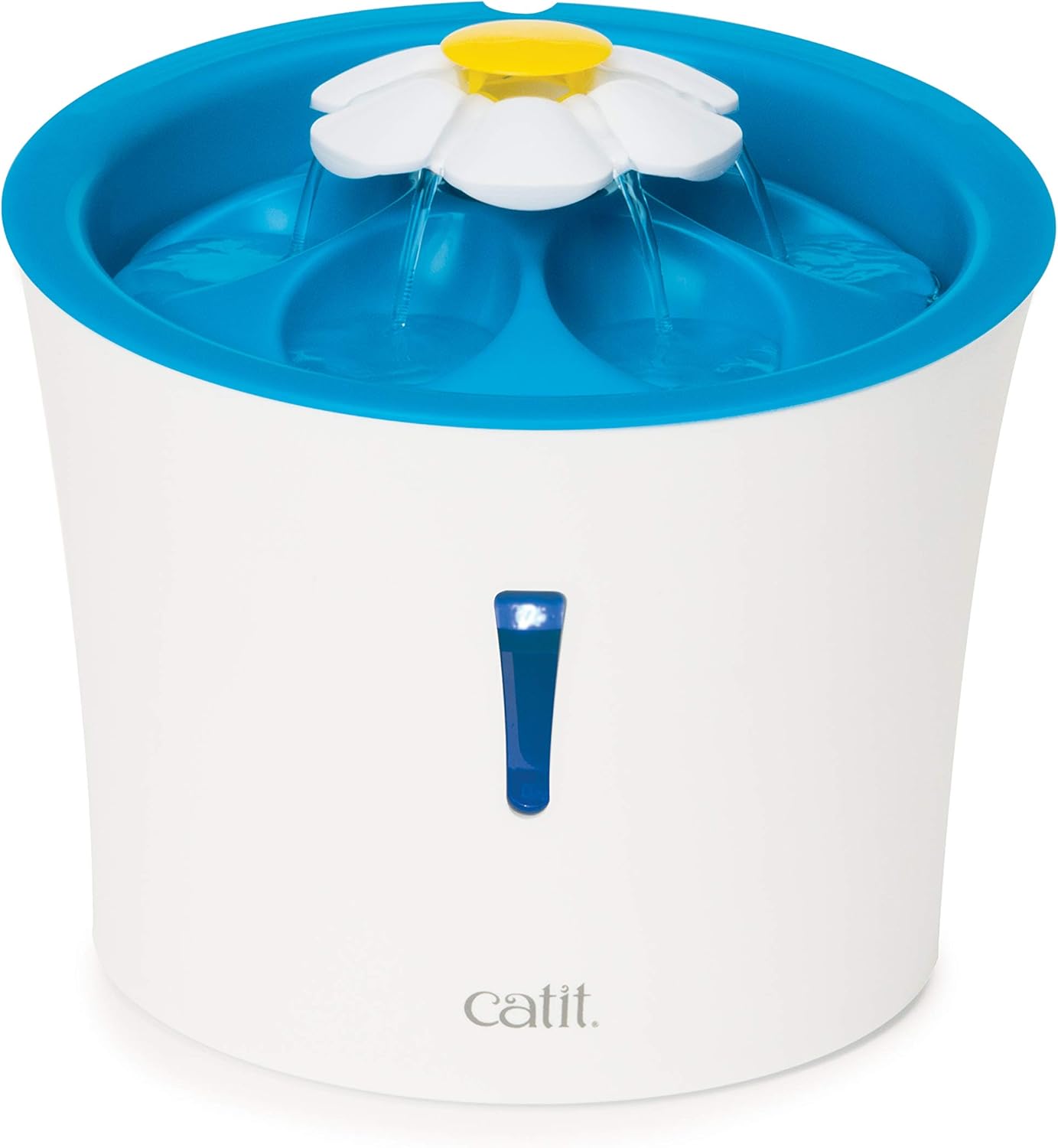
Catit Flower Fountain
4.3 (49,522)The Catit Flower Fountain has three different flow settings, which makes it genuinely versatile for older cats who may have developed preferences or sensitivities as they age. Keeping senior cats well hydrated is especially critical for kidney health, and this fountain makes it easy to find a flow style they will actually drink from consistently. The triple-action filter (foam pre-filter, activated carbon, and ion-exchange resin) is one of the more thorough filtration setups at this price point, and the flower-shaped top is what made this design a category staple in the first place; most cats seem drawn to pawing at the individual petals before drinking. We covered this exact model in more depth, including how it compares against three other Catit fountains, in our full Catit Water Fountain Review. If you are also thinking carefully about what you feed an aging kitty, our guide to the Best Cat Food for Senior Cats pairs well with this fountain review.
Pros
- Three interchangeable flow modes suit different preferences
- Triple-action filter removes debris, softens water, and eliminates odors
- Fun flower design that curious cats seem to love
Cons
- Only 100 oz capacity, smaller than some competitors
- Flower top can collect hair and debris quickly
Price range: $30-$45

PETKIT Eversweet Smart Pet Water Fountain
4.1 (953)The PETKIT Eversweet connects to an app that tracks how much your cat is drinking each day, which sounds gimmicky until your vet tells you to monitor fluid intake more closely, for example after a UTI or kidney diagnosis. It is one of the more tech-forward cat water fountains out there, and for owners who love data and already use tools like those covered in our Best Pet Cameras 2025 roundup, it fits right into a connected pet care setup. Beyond the tracking gimmick, the UV sterilization light is a genuinely practical feature that most competitors at this price skip entirely, since it helps knock back bacterial growth in the reservoir between filter changes. It's the pick I'd steer toward anyone whose vet has specifically asked them to log daily water intake, since manually eyeballing a bowl just isn't reliable data.
Pros
- App tracks daily water consumption for health monitoring
- UV sterilization light helps kill bacteria between cleanings
- Smart pump auto-adjusts to water level
Cons
- App setup can be finicky on older smartphones
- Higher price point than most fountain options
Price range: $55-$75
Quick Comparison
| Product | Best For | Capacity (oz) | Price | Rating |
|---|---|---|---|---|
| Drinkwell Platinum Pet Fountain | Best Overall | 168 | $45-$60 | 4.3 (23,243) |
| Pioneer Pet Stainless Steel Raindrop | Best Stainless Steel | 60 | $35-$50 | 3.9 (8,601) |
| PETLIBRO Capsule Fountain | Best Budget Pick | 67 | $25-$35 | 4.3 (468) |
| Catit Flower Fountain | Best for Senior Cats | 100 | $30-$45 | 4.3 (49,522) |
| PETKIT Eversweet Smart Fountain | Best Smart Fountain | $55-$75 | 4.1 (953) |
Ratings measured 2026-08-16 from Amazon listing pages. The PETKIT Eversweet capacity is left blank because we have not measured it.
How to Choose the Right Fountain for Your Household
One cat, average household: Almost any fountain on this list will work. The PETLIBRO Capsule or Catit Flower Fountain are the easiest entry points, both quiet enough for a nervous cat and cheap enough that it's not a big loss if your particular cat turns out to be indifferent to fountains altogether.
Multi-cat households (3+ cats): Capacity becomes the deciding factor before anything else. The Drinkwell Platinum's 168-ounce reservoir means you're not topping it up daily, and its wide basin lets more than one cat drink comfortably at the same time without one cat guarding the only access point, which does happen in multi-cat homes.
Senior cats or cats with kidney concerns: Prioritize a fountain your cat will actually approach consistently over one with the most features. The Catit Flower Fountain's adjustable flow settings help you dial in exactly the style an older cat prefers, and if your vet wants intake data, the PETKIT Eversweet's app tracking removes the guesswork.
Cats with chin acne or skin sensitivities: Go stainless steel. The Pioneer Pet Raindrop Fountain is the clear pick here since it eliminates the plastic surfaces that tend to aggravate the condition.
Budget-first buyers: The PETLIBRO Capsule delivers the most fountain for the least money without meaningfully compromising on noise level or reliability, based on the spread of verified buyer ratings across price tiers.
How Much Water Should a Cat Drink a Day?
There is an actual number, and it is smaller than people expect.
Cornell's Feline Health Center puts it at about 4 ounces of water per five pounds of lean body weight per day, so an average ten-pound cat needs roughly one cup, about 240ml, in total across a day.
Why the bowl is not the measurement
That figure is total water, not water drunk. Wet food is up to about 80 percent water, so a cat eating canned food covers most of its requirement at the bowl it eats from and will visibly drink less. A cat on dry food has to drink nearly all of it. Watching the water bowl and concluding your wet-fed cat is dehydrated gets it backwards.
A rough sum you can do at home
- 4kg cat, dry food only: nearly the whole 200ml or so has to come from drinking. This is the cat a fountain might help.
- 4kg cat, two pouches of wet food a day: most of it arrives in the food. Little drinking is normal, not a warning sign.
- Multi-cat home: you cannot measure per cat from a shared bowl. If intake matters medically, your vet will want a different method than watching.
When to stop counting and call someone
Cornell lists lethargy, weakness, poor appetite and dry gums as signs of dehydration, with sunken eyes in worse cases. Two changes matter more than any absolute number, and both mean a vet rather than a new fountain:
- A sudden increase in drinking. In an older cat this is one of the first signs of kidney disease, hyperthyroidism or diabetes. A cat that starts emptying the bowl is not being good; it is telling you something.
- A sudden drop, with straining in the litter box. In a male cat especially, that is an emergency and not a hydration question.
Fountain Placement and Setup Tips
Where you put the fountain matters almost as much as which one you buy. Keep it away from the litter box, since cats instinctively avoid drinking near where they eliminate, and place it somewhere with a nearby outlet so you're not running a cord across a walkway. For multi-cat homes, a second fountain (or at least a second bowl) in a different part of the house reduces the odds of one cat blocking access to the only water source. Give a new fountain a trial run next to your cat's existing bowl for the first week rather than removing the bowl immediately; most cats investigate the new object on their own timeline, and forcing the switch too fast can backfire with an anxious cat ignoring both.
Maintenance and Cleaning Schedule
A cat water fountain is only as hygienic as your cleaning routine. Based on manufacturer guidance and patterns across verified buyer reviews, a realistic schedule looks like this: top off or fully refill the reservoir every two to three days, wipe down the visible basin and top piece weekly, and do a full teardown (pump, impeller, filter housing, and all removable parts) every one to two weeks. Replace the filter itself every two to four weeks depending on your water hardness and how many cats share the fountain; hard water and multi-cat households both shorten that window. If you ever see a pink or orange tint forming around the waterline, that's biofilm, not mineral buildup, and it needs an immediate deep clean with a bottle brush and mild dish soap rather than just a rinse.
Our Top Pick
The Drinkwell Platinum Pet Fountain earns the top spot because it nails the balance between capacity, filtration, and long-term reliability that most cat owners actually need. Whether you have one cat or four, the adjustable flow and generous reservoir make it the easiest recommendation we can make without hesitation. If your priority is hygiene above all else, the stainless steel Pioneer Pet Raindrop Fountain is our runner-up recommendation, and if budget is tight, the PETLIBRO Capsule is the smartest way to test whether your cat responds to a fountain at all before spending more.
A few guides readers usually read alongside this one: Best Cat Carriers for Vet Visits: 5 Top Picks That Keep Everyone Calm, Catit Water Fountain Review: The 5 Best Models Tested, 10 Essential Cat Care Tips, cheapest cat litter, Best Cat Food for Senior Cats, and Best Interactive Cat Toys for keeping an indoor cat active alongside good hydration habits.
Frequently Asked Questions
Willemijn has kept animals for around 45 years. She did not have these particular items in her own home. What follows is her read on them, put together from research and from what she has seen at other owners' houses. We keep it separate from her hands-on notes on purpose, because the two are not the same thing.
Pioneer Pet Raindrop (stainless steel). A good fountain, easy to clean, but the pump was loud. Drawback: The noise. 3 out of 5.
Catit Flower Fountain. Beer drank from it, but it is a nightmare to clean. Drawback: Cleaning it. 2 out of 5.
Willemijn is a friend of the founder and is not paid for this.